
Last updated November 15, 2026
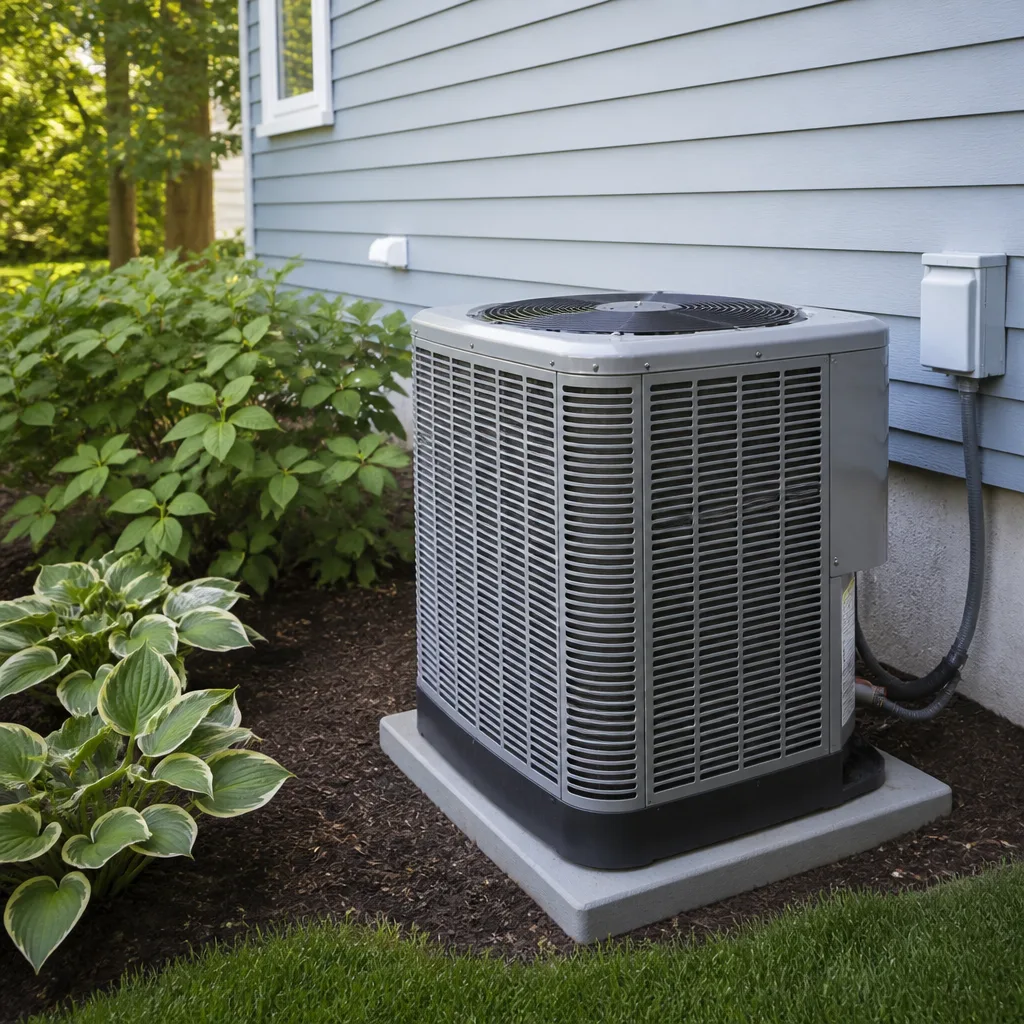 AC repair
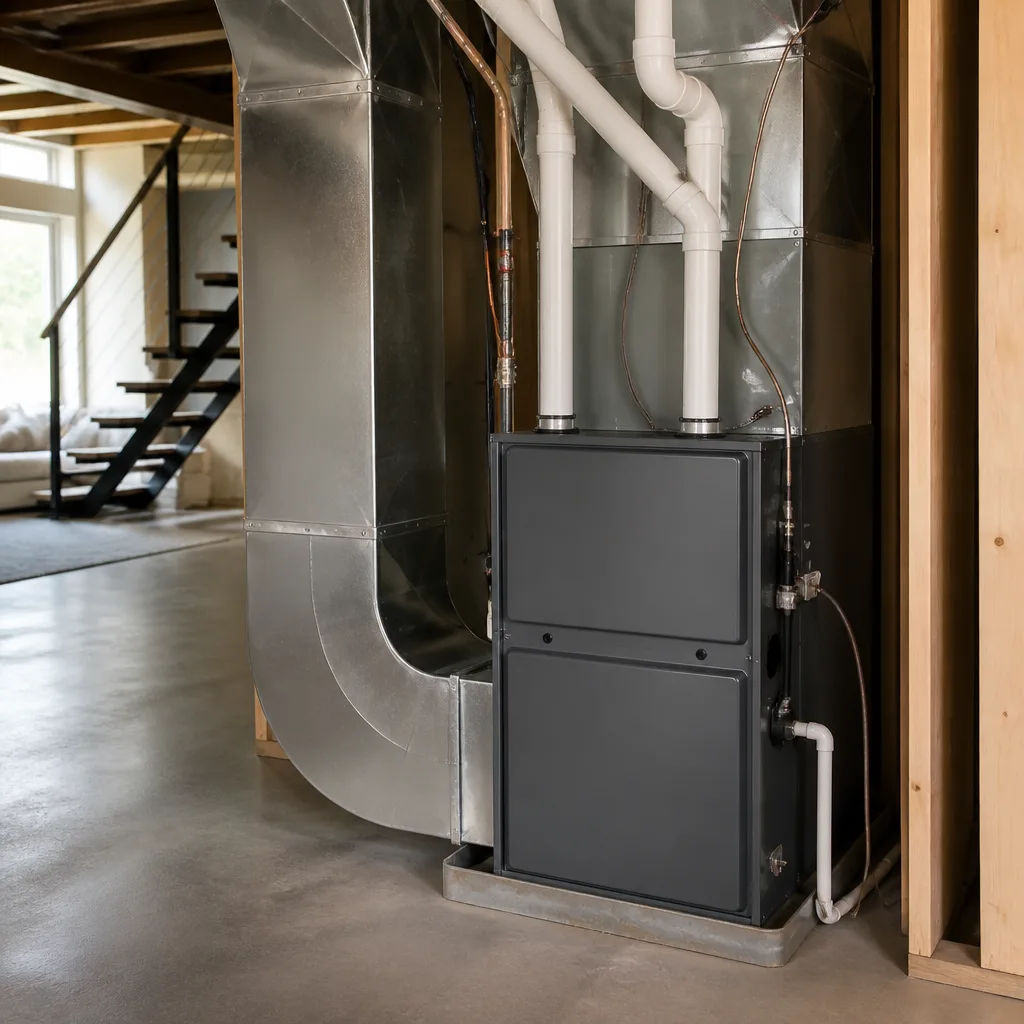 Furnace & heating
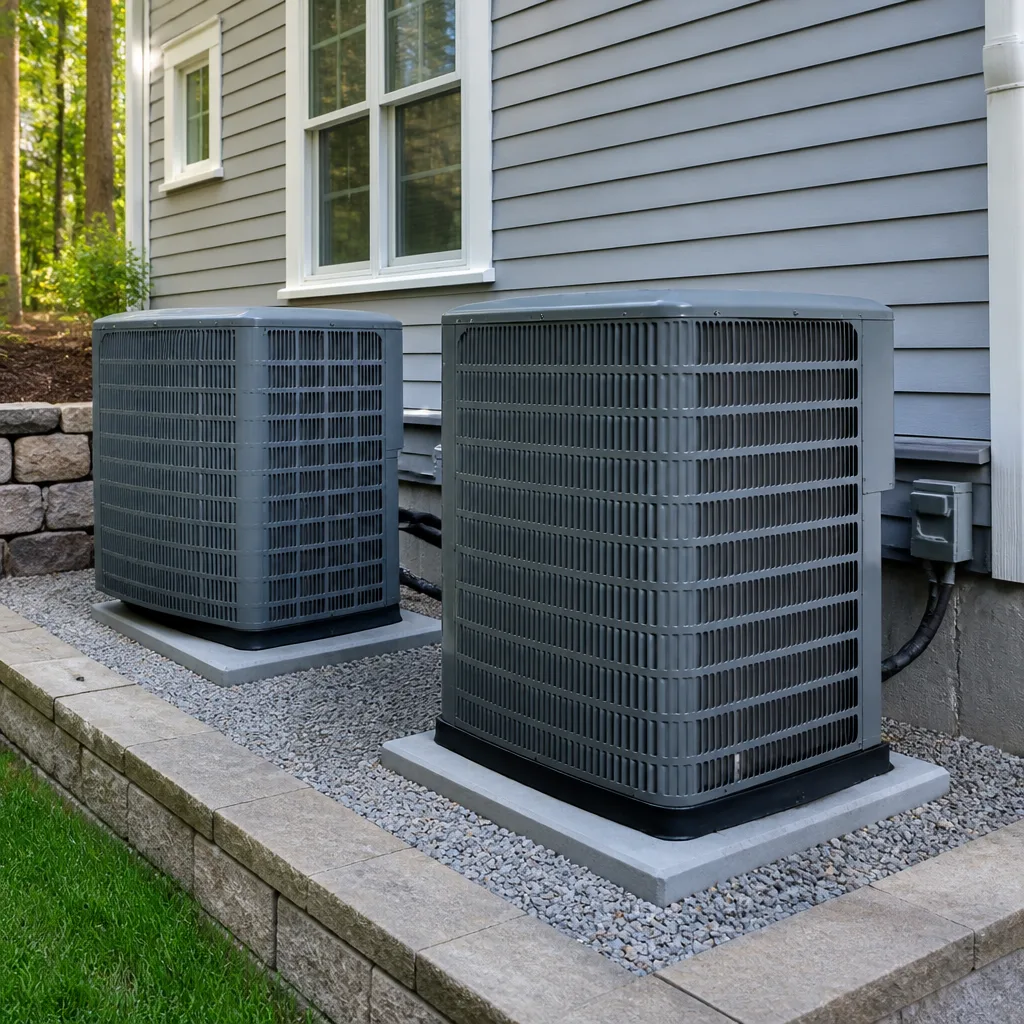 Heat pumps
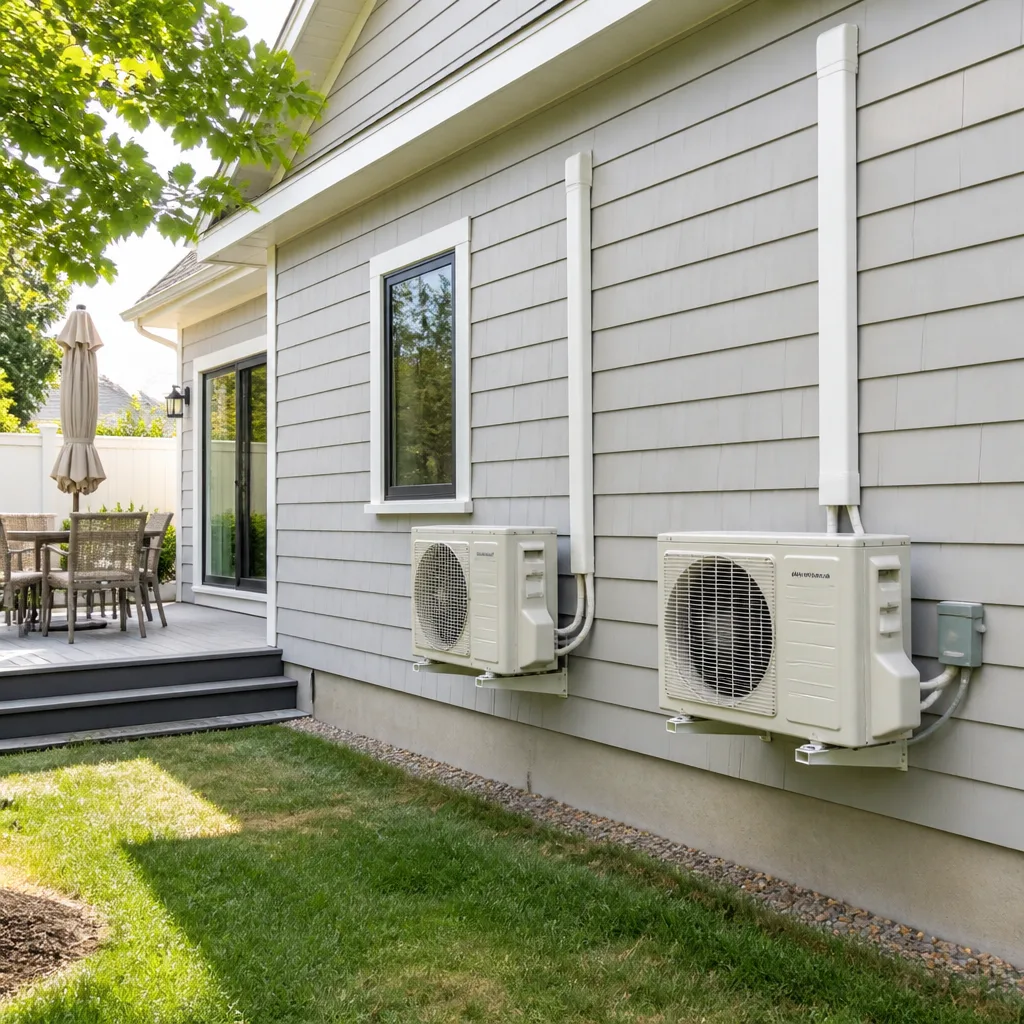 Ductless mini splits
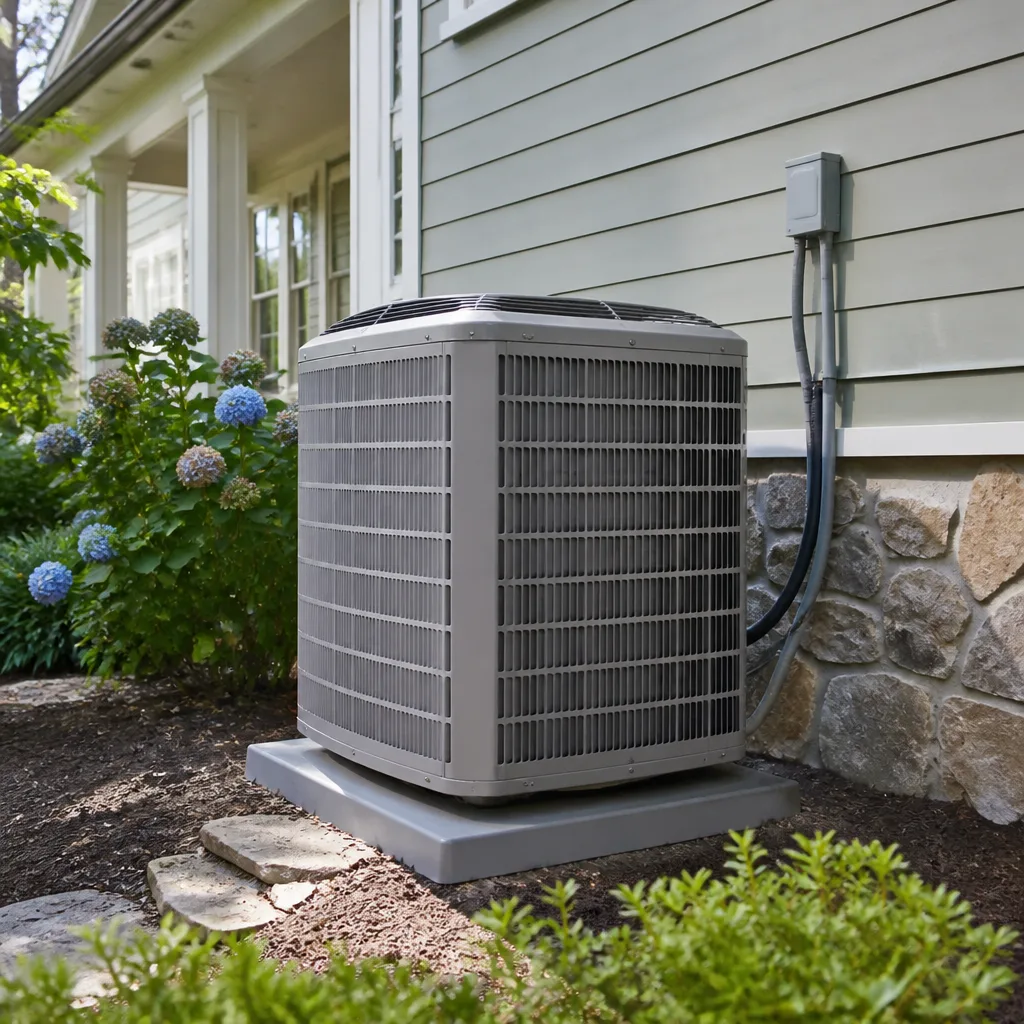 Carrier
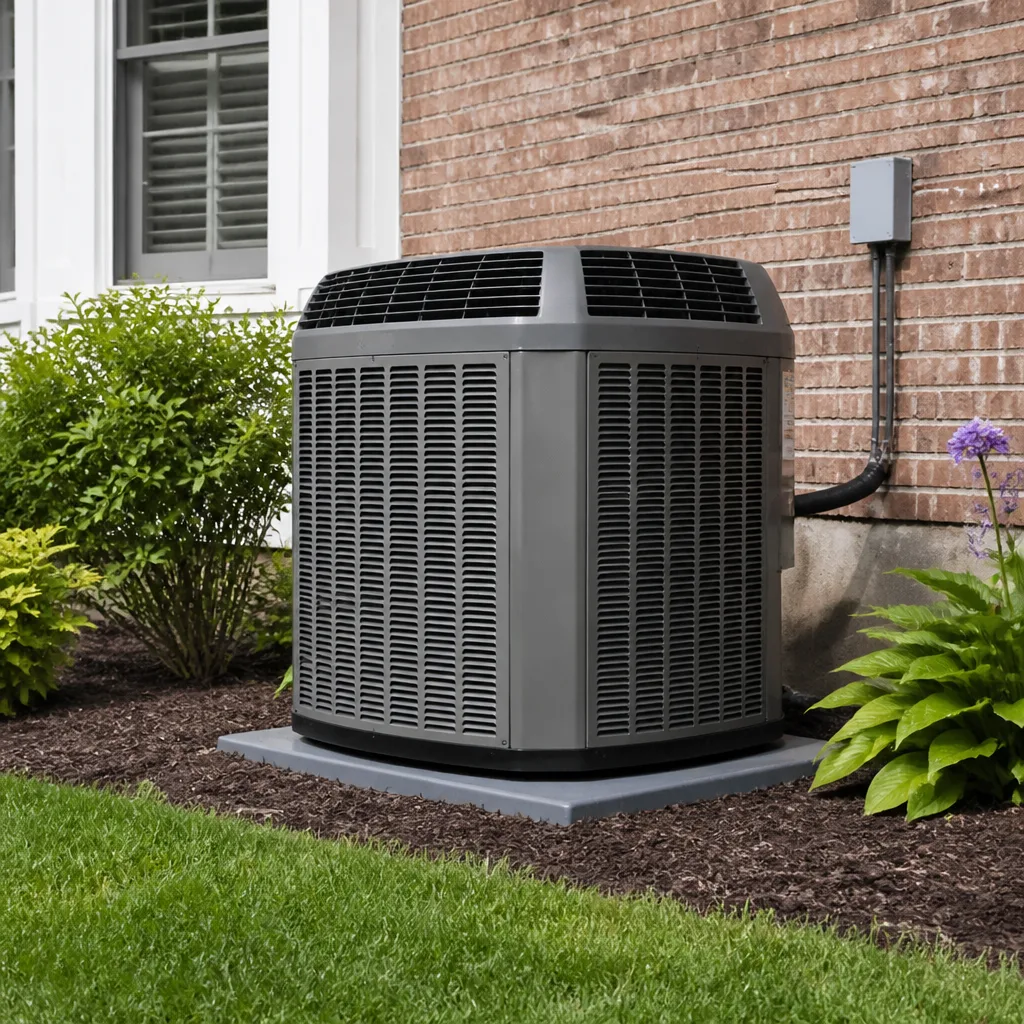 Trane
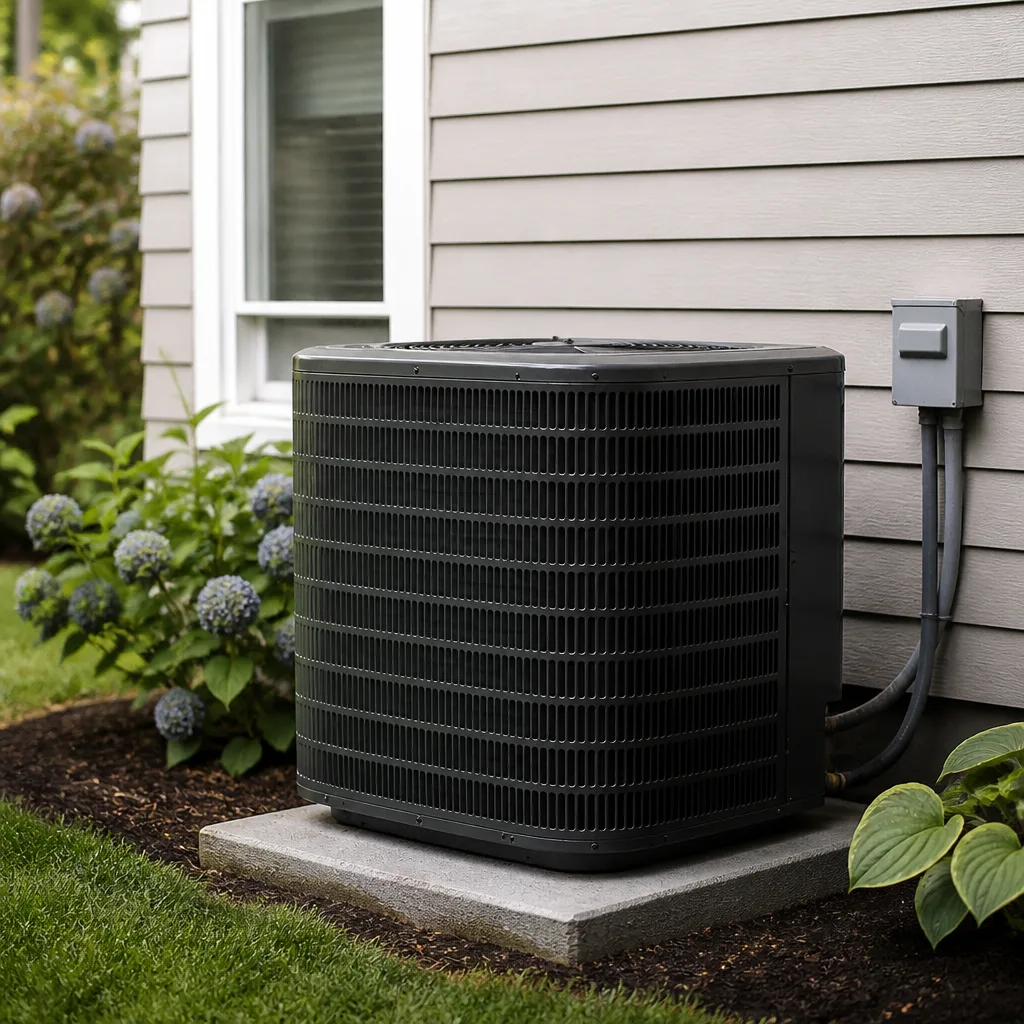 Goodman
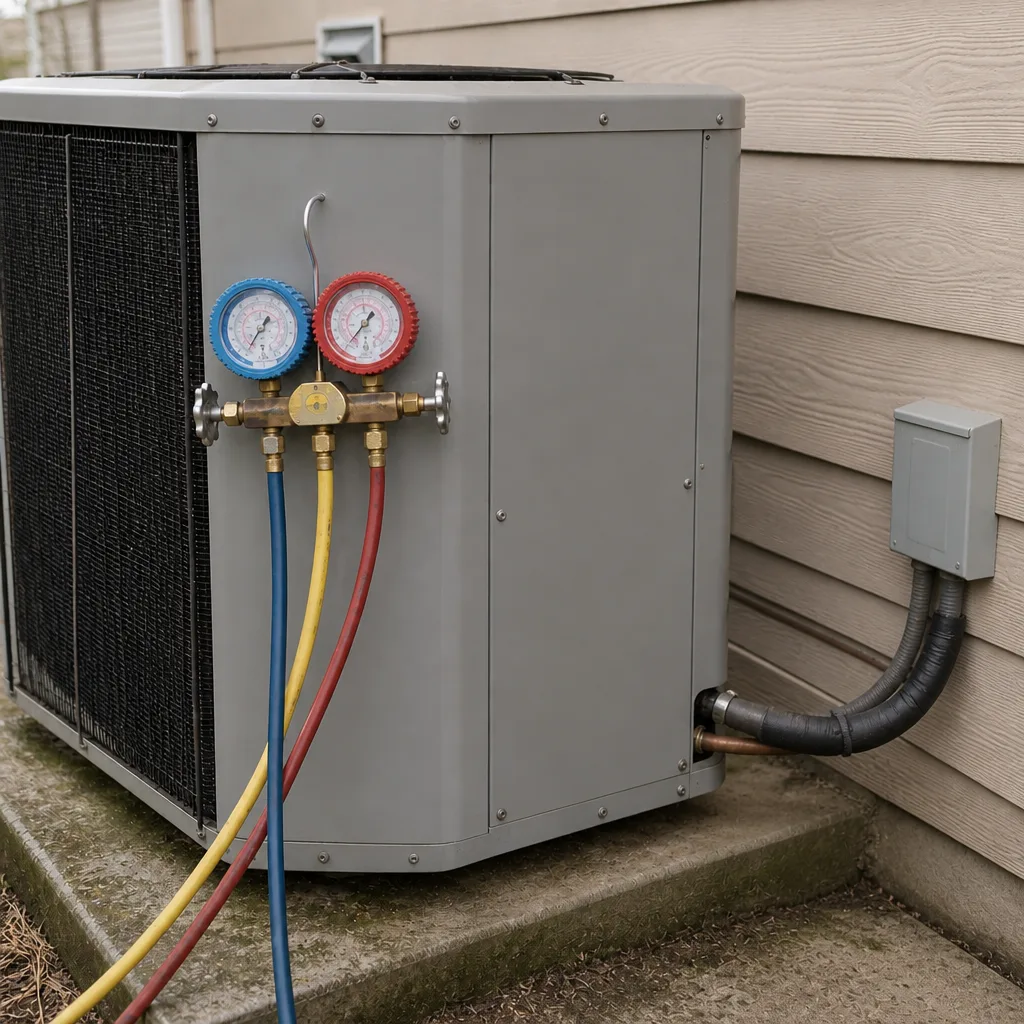
Seasonal tune-up and full diagnostic on your Carrier, Trane, or Goodman system - readings shown to you before any repair is proposed
Diagnosis first, numbers second - you approve the repair price before a single part goes in.
Get your free estimateHVAC Warning Signs: A Pasadena Homeowner’s Reference Guide
Most homeowners wait until the house is uncomfortable to think about their HVAC system. That’s backwards. The equipment almost always tells you something is wrong before it fails – a slightly longer runtime, a breaker that trips once, a musty smell that comes and goes. The problem is that “warning signs” articles list symptoms without translating them. You’re told your AC “might be low on refrigerant” but not what that actually means, how urgent it is, or whether to call today or next month. This guide fixes that. We pair each symptom with a plain-language diagnosis and a clear verdict: monitor it, schedule service, or call now. We’re writing it from Pasadena, because the conditions here shape which warnings matter most.
Quick Answer
The warning signs that require you to call immediately are electrical in nature: a burning smell, repeated breaker trips, or a compressor that hums and shuts off within seconds. Everything else – reduced airflow, longer runtimes, odd noises, excess condensate – falls into monitor or schedule-service territory. If your registers blow air that’s 15 to 20°F cooler than the return air, cooling is working; if the gap is smaller, you have a problem worth diagnosing.
Styles & brands we work with
- AC repair
- Furnace & heating
- Heat pumps
- Ductless mini splits
- Carrier
- Trane
- Goodman
Table of Contents
- The Three-Tier Triage System
- Delta-T: The One Number That Tells You if Cooling Is Working
- Electrical Warning Signs That Require Immediate Shutdown
- Pasadena-Specific Warning Signs
- The 60-Second Self-Diagnostic Before You Call
- Warning Signs That Aren’t HVAC Problems
- Heating-Side Warnings Worth Knowing Now
- Common Mistakes to Avoid
The Three-Tier Triage System
Before we get into specific symptoms, you need a framework for sorting them. We’ve talked to enough homeowners to know that the biggest problem isn’t missing a warning sign – it’s misjudging it. People call emergency lines for a system that’s just overdue for a filter change, and they sit on a failing compressor for weeks because “it’s still cooling.” Both mistakes cost money.
Sort every symptom into one of three tiers:
- Tier 1 – Monitor (cosmetic or minor). The system is cooling or heating within normal range. Something looks or sounds slightly off. Write down the date, the symptom, and the conditions. Check back in a week. Examples: a faint rattle at the outdoor unit, a small oil stain, a filter that loads up quickly.
- Tier 2 – Schedule Service (performance degrading). The system still works but is working harder than it should. Efficiency is dropping, and the longer you wait, the more likely a repair becomes a replacement. Examples: reduced airflow at some registers but not others, runtimes that have stretched by several minutes, musty odors, condensate overflowing the drain pan.
- Tier 3 – Shut It Down and Call Now (safety or imminent failure). Electrical smells, repeated breaker trips, compressor short-cycling on startup, or a gas furnace with a smell of gas or a flame that looks wrong. These are the only symptoms that justify an emergency call.
That last tier is where judgment matters most. A compressor that hums for a few seconds and shuts off isn’t “struggling through” – it’s failing to start, and letting it keep trying can burn out the windings. A burning smell at the air handler is a fire concern, not a performance issue. When in doubt, shut the system off at the thermostat and call. Call (866) 982-5097. We answer 24/7. Fast dispatch from 7am to 7pm, Sunday through Friday. A call outside dispatch hours is booked into the next opening.
Delta-T: The One Number That Tells You if Cooling Is Working
Delta-T is the temperature difference between the air going into your return and the air coming out of a supply register. A healthy system running on a normal day produces a delta-T of roughly 15 to 20°F. If your return air is 78°F and your supply registers blow 60°F, you’re at 18°F and everything is fine. If supply air is 68°F against that same return, you’re at 10°F, and the system is either short of refrigerant, starved of airflow by a dirty evaporator coil, or both. That narrowed gap is the single most useful thing you can measure before calling anyone.
Why it matters more than feel: a system can “feel like it’s running” while producing well below its rated capacity. It’ll run all afternoon, the house never quite gets there, and the electric bill climbs because the compressor is working longer for less cooling. Homeowners in Pasadena often attribute this to the heat, not the equipment. But a properly charged system with clean coils handles a Pasadena afternoon the same as the manufacturer designed it to.
How to take the reading yourself:
- Let the system run 20 minutes on a normal hot afternoon without interruption.
- Set a thermometer at a return grille and give it 5 minutes to stabilize.
- Move it to a supply register closest to the air handler and give it 5 minutes.
- Subtract. Record both numbers.
- Repeat the same afternoon at a register furthest from the air handler. If the delta drops significantly between registers, you likely have a duct problem, not a refrigerant problem.
Both numbers – return and supply – are what we want to hear. “It’s not cooling right” tells us almost nothing. “The return is 78, supply is 68, and the far bedroom is 72” tells us a great deal before we walk in.
Electrical Warning Signs That Require Immediate Shutdown
Every other symptom in this guide can usually wait for an appointment. These cannot. Electrical faults in HVAC equipment are the one category where “let’s see if it clears up” can turn into a fire. If you see any of the following, switch the system off at the thermostat, switch off the indoor air handler breaker, and call us. Don’t inspect inside the air handler cabinet yourself – the blower motor and control board are fed by 240-volt power that stays live even after the thermostat is off.
- Burning or hot-plastic smell at the air handler or outdoor unit. Usually a failing motor winding, a capacitor that’s given up, or a loose terminal heating up. All of these need a technician and none should be run again.
- A breaker that trips more than once in a cooling season. A single trip after a Pasadena thunderstorm is one thing. A breaker that trips the same way twice is telling you current draw is way above spec – shorted compressor, failing condenser fan motor, or a wiring issue that will eventually damage the compressor.
- Compressor hums for 3 to 5 seconds then shuts off, repeats. Classic hard-start symptom, usually a failed run capacitor or a seized compressor. Letting it cycle can destroy the compressor and turn a mid-range repair into a full replacement.
- Outdoor unit fan not turning while the compressor runs. The compressor will overheat quickly. Shut it off.
- Sparks, scorch marks, or a charred smell at the outdoor disconnect. This is a fire hazard. Do not reset the disconnect. Call us and we’ll get a technician out.
- Tingling when you touch a metal cabinet. That’s a ground fault. Stop using the system until it’s inspected.
For electrical work, we recommend you don’t try a reset-and-wait strategy. If you reset the breaker and it holds the first time, you can note the date and monitor. If it trips again, that’s your Tier 3 verdict. Same rule for a burning smell that appears once and doesn’t come back the next cycle: shut it down and schedule service. Odds are good a capacitor or motor is failing, and those are cheaper to replace now than to replace alongside a compressor later.
Pasadena-Specific Warning Signs
Pasadena’s climate and industrial footprint shape which warning signs you should watch for. Our summers run humid, which matters for the indoor side of your system. Our air carries the kind of particulate load that a heavily industrial corridor produces. And Pasadena homes, especially in the older neighborhoods, often have ductwork and air handlers that were installed long enough ago to have picked up some wear. The three symptoms below show up in our service work more often here than the national averages suggest.
Excessive condensate and a wet pan. Air conditioning removes moisture from the air, and on a humid Pasadena afternoon it can remove a lot. A properly draining system routes that water outside. When you notice water standing in the secondary pan under the air handler, or a drain line that continuously drips despite a stable indoor set point, something is either blocked or the coil is pulling more moisture than usual. A blocked drain line will eventually overflow and damage drywall or flooring. A pan that fills over days means the drain needs clearing or the coil needs inspecting. Either way, that’s Tier 2.
Musty or “wet basement” odors from the return air. These almost always come from the indoor air handler and are usually driven by biological growth on the evaporator coil or in the ductwork. Pasadena’s humidity is enough to keep the coil wet between cycles. If it’s not draining fully or the filter isn’t catching enough airborne debris, growth takes hold. A musty smell isn’t just unpleasant – the system is recirculating whatever is causing it. Schedule service in Tier 2, and expect the technician to inspect the coil and drain pan, not just swap a filter.
Corrosion on the outdoor unit’s coil and cabinet edges. Industrial air carries fine particulate and trace chemicals that settle on condenser coils and, combined with moisture, drive surface rust. You can spot it as white or brownish buildup on the aluminum fins or as rust creeping out of the screws at the cabinet corners. Some surface oxidation is normal. But visible fin degradation means the system is losing heat-rejection capacity, which shows up as longer runtimes and higher bills. Fins that crumble when you brush them lightly are a Tier 2 signal that cleaning and coil inspection are overdue.
The 60-Second Self-Diagnostic Before You Call
Before you call, gather the numbers. A technician with a delta-T, a supply temperature at multiple registers, and an indoor humidity reading can often diagnose from the driveway. A homeowner who says “it’s just not cooling” costs both of you time. Here’s the routine we recommend. It takes about a minute and you’ll need your phone, a quick-read thermometer, and a note app.
Step 1 – Check the thermostat first (5 seconds). Confirm mode is set to COOL, the fan is on AUTO, and the set point is below the room temperature. Sounds obvious. It isn’t always, especially if a family member changed it.
Step 2 – Read the return air (10 seconds). Hold a digital thermometer at a return grille and wait for it to stabilize. Most modern phone-based thermometers or a quick-read meat thermometer will do. Record the number.
Step 3 – Read two supply registers (20 seconds). One near the air handler, one far from it. Record both numbers.
Step 4 – Measure indoor humidity (15 seconds). Use your phone’s humidity sensor if it has one, or a cheap hygrometer. Anything above 60% indoors during cooling season means the system is struggling to remove moisture, even if the temperature feels okay.
Step 5 – Listen for 10 seconds at the outdoor unit. Is the fan spinning? Is the compressor running steadily, or is it starting and stopping? Write it down.
When you call, read those numbers. “Return is 78, near register is 58, far register is 66, humidity is 63, compressor is cycling every 10 minutes” gives us a working hypothesis before we arrive. Call (866) 982-5097. We answer 24/7. Fast dispatch from 7am to 7pm, Sunday through Friday. Estimates are free.
Warning Signs That Aren’t HVAC Problems
Some of the most common complaints we get turn out not to be the HVAC equipment at all. Before you spend money on a repair, rule out these three lookalikes. If your system passes a delta-T test but the house still isn’t comfortable, the problem is almost always one of these.
Attic insulation failure. In a Pasadena attic, insulation can compress, sag, or absorb moisture over time and lose the thermal resistance it was installed for. The house then gains heat from the attic all afternoon, the AC runs constantly, and the system gets blamed for what is actually an envelope problem. A delta-T that reads healthy (15 to 20°F) alongside high runtimes points here. A failing system will typically show a low delta-T too.
Duct leakage. If some rooms are comfortable and others consistently aren’t, and the delta-T at a far register is several degrees lower than a near one, air is leaking from the ducts before it reaches the room. Ducts in unconditioned attics leak more than you’d expect, and no amount of equipment tuning fixes a supply duct that’s dumping cooled air into the attic. A duct static pressure test can confirm it.
Air sealing and pressure imbalance. When a return can’t get enough air because the house is too tight, or a supply is choked by a closed interior door, the system can’t distribute the cooling it’s producing. Room doors closed all day and gaps in exterior walls can both create zone problems that mimic equipment failure. Airflow testing is the honest diagnosis.
Our recommendation: if the delta-T is healthy and the runtime is still long, ask a technician to evaluate the envelope and ductwork before approving any equipment repair. Sometimes a system is being told to cool a house that’s leaking its cooling back outside. That’s not a compressor problem.
Heating-Side Warnings Worth Knowing Now
Pasadena winters are mild, and that’s precisely why heating problems get missed. A furnace that runs only a few dozen hours a year doesn’t fail on anyone’s radar until it does. The good news: the warning signs on the heating side are just as readable as the cooling side, and they’re worth learning before you need them.
Any smell of gas at the furnace. Shut the system off at the thermostat, leave the area, and call your gas utility from outside the house before calling anyone else. Once the leak is addressed, we can inspect the furnace. Gas is never a do-it-yourself item, and no technician worth trusting will tell you to “air it out and see.”
A yellow, lazy flame instead of a crisp blue one. A blue flame with a slight inner cone is normal. A yellow, floating, or dancing flame suggests incomplete combustion and a carbon monoxide risk. A trained technician should check the heat exchanger, burners, and venting before the furnace runs again.
Short cycling on heat. A furnace that heats for a minute and shuts off is usually hitting its high-limit switch, which signals restricted airflow (dirty filter, failing blower, blocked duct) or an oversized furnace. Short cycling on heat is a Tier 2 problem – get it serviced before it becomes a mid-winter no-heat call.
Rumbling, popping, or a delayed ignition “thud.” Delayed ignition can mean dirty burners or a failing igniter. It’s also a small explosion each time it happens, which is hard on the heat exchanger. Worth a service call before the cold snap arrives.
No heat at all with the thermostat calling. Check the filter and the breaker first. If both are fine, call. For furnace repair, we handle the diagnosis and repair for the same nine brands we service on the cooling side – Carrier, Trane, Lennox, Goodman, Rheem, York, Daikin, Bryant, and American Standard. When the furnace reaches end of life, we walk through furnace replacement under the same roof, so you don’t hand the job to a second contractor who’s never seen your ductwork or your home.
One more heating-side note: if your system is due for replacement and you’re choosing between a repair and a new system, factor the age of the equipment and how many repairs it’s already taken. A furnace on its third repair in two seasons is telling you something. A furnace with a single faulty igniter is usually a straightforward fix.
Common Mistakes to Avoid
These are the mistakes we see homeowners make around HVAC warning signs – each one either wastes money or, in a few cases, creates a real safety problem. If you can avoid these, you’ll get more life out of the equipment you have and make better decisions when something genuinely goes wrong.
- Resetting a tripped breaker repeatedly. A breaker that trips is doing its job. Each reset sends current through a fault that’s already stressed something in the circuit. If the breaker trips twice in a season, call before touching it again.
- Diagnosing by feel instead of by numbers. “It’s kind of cool” isn’t data. Take the return and supply temperatures before you call. The difference tells you – and us – whether you’re looking at a cooling problem, a distribution problem, or an envelope problem.
- Chasing the filter every time performance drops. Changing the filter is the cheapest first step, and yes, do it. But a Pasadena homeowner who’s changed the filter twice and still isn’t comfortable usually has a coil, charge, or duct issue that no filter will fix.
- Treating a musty smell as “just how it is.” Musty return air is telling you that coil or ductwork has biological growth on it. Left alone, it recirculates through the whole house every cooling season. It’s a Tier 2 problem every time.
- Ignoring small water leaks from the indoor unit. A drip from a drain line or a slightly wet secondary pan means the drain isn’t working properly. Blocked drains overflow eventually, and drywall and flooring are expensive to fix. They’re also entirely preventable.
- Blaming the equipment for a house problem. Long runtimes with a healthy delta-T usually mean the house is leaking cooling into the attic or the ducts are. That’s insulation, air sealing, or ductwork – not the compressor.
- Calling an emergency line for a Tier 1 symptom at 10 p.m. A faint rattle or a filter issue does not need a late-night visit. Note it and call during normal dispatch, when a full diagnostic visit is more useful and less rushed. Save the late-night call for electrical smells, gas, or a system that’s fully down in the heat.
See the difference
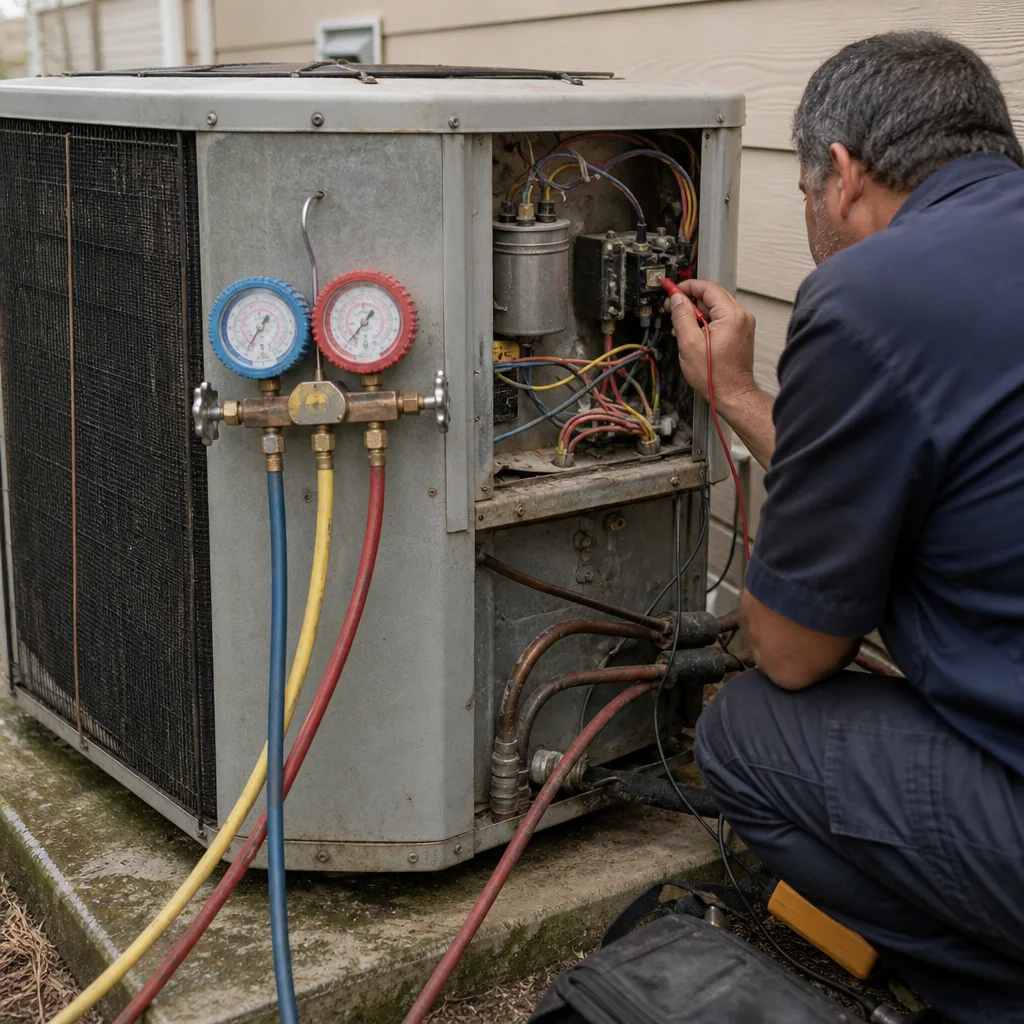 Before
 After
 Before
 After
 Before
 After
When to Call a Professional
Call us now, not later, if you smell burning, see a breaker trip twice, hear the compressor hum and shut off, or smell gas near the furnace. Those five symptoms are non-negotiable – shut the system down first, then call. Schedule a service appointment if your delta-T is below 15°F, your runtime has stretched by several minutes, you notice musty odors from the return, drains are overflowing, or the outdoor unit is showing fin corrosion that’s progressed past light surface rust. Monitor if the symptom is cosmetic and the system is performing. If your system passes delta-T and the house still isn’t comfortable, ask for an envelope and duct evaluation before approving any equipment work. Paragon AC Repair offers free estimates in Pasadena – call (866) 982-5097. We answer 24/7. Fast dispatch from 7am to 7pm, Sunday through Friday. A call outside dispatch hours is booked into the next opening.
Frequently Asked Questions
The single most reliable sign is a delta-T below 15°F combined with normal return temperatures. A healthy system produces a 15 to 20°F difference between return and supply air. If you measure 78°F return and 66°F supply, you’re at 12°F, and something is restricting cooling capacity – typically refrigerant charge, a dirty evaporator coil, or restricted airflow. Call (866) 982-5097 for an exact quote before the system fails completely. Estimates are free.
Yes. Shut it off at the thermostat and switch off the indoor air handler breaker, then call us. Burning smells at an HVAC unit almost always come from a failing motor, capacitor, or loose electrical connection – none of which improve with running. Don’t inspect the interior of the unit yourself. Call (866) 982-5097 for same-day service.
Musty odors usually come from the indoor air handler – specifically biological growth on the evaporator coil or in the drain pan and nearby ductwork. Pasadena’s summer humidity keeps that coil wet between cycles, and if drainage or filtration isn’t quite right, growth takes hold. A service call should include an inspection of the coil and drain pan, not just a filter change.
It could be either, and delta-T tells you which. If your measured delta-T is 15 to 20°F, the equipment is working correctly and the problem is almost certainly in the house – attic insulation, duct leakage, or air sealing. If delta-T is low, the equipment itself needs service. Measure first, then call (866) 982-5097 with the numbers.
Usually, if we schedule it that way. We service both heating and cooling under one company, and we’re certified on nine major brands including Carrier, Trane, Lennox, and American Standard. That means a technician who diagnoses your AC also knows your furnace. Call (866) 982-5097. We answer 24/7. Fast dispatch from 7am to 7pm, Sunday through Friday.
Tier 2 means performance is degrading but the system is safe to run – reduced airflow, longer runtimes, musty odors, drain leaks. Tier 3 means something is unsafe or failing right now – burning smells, repeated breaker trips, humming on startup, gas smells, sparks. Tier 2 warrants an appointment in the next several days. Tier 3 warrants shutting the system down and calling immediately. When in doubt, treat it as Tier 3. Call (866) 982-5097. Estimates are free.
The Bottom Line
Warning signs only help if you know what they mean and how urgent they are. Delta-T is the single most useful thing you can measure yourself – a 15 to 20°F gap between return and supply air tells you the equipment is cooling to spec, while anything narrower points to a real problem. Electrical symptoms are the only ones that justify shutting the system down and calling now. Everything else falls into monitor or schedule-service territory, and the answer to “is it the equipment or the house?” almost always starts with a measurement. Whatever brand you have – Carrier, Trane, Lennox, American Standard, and six others – we know it, and we handle both sides of the system so you don’t call a different contractor between seasons. If you’d rather have a professional walk through it, we’re one call away.
If your Pasadena home is showing any of the warnings in this guide, don’t wait for the system to pick the timing for you. A mid-range repair scheduled early is cheaper than an emergency replacement in the middle of a heat wave. Call (866) 982-5097 for a free estimate. We answer 24/7. Fast dispatch from 7am to 7pm, Sunday through Friday. Whether you need AC installation down the road or a diagnostic today, we’ll give you a written estimate that sets the final price before any work begins. And if your furnace is the problem this time, our furnace repair team covers the same brands on the heating side. For the full range of what we do, visit Paragon AC Repair. Our technicians have up to 9 years of experience, and we handle the entire equipment lifecycle – from a single diagnostic visit through installation and eventual replacement – so the relationship doesn’t end with the invoice.
Written by the team at Paragon AC Repair.