
Last updated November 15, 2026
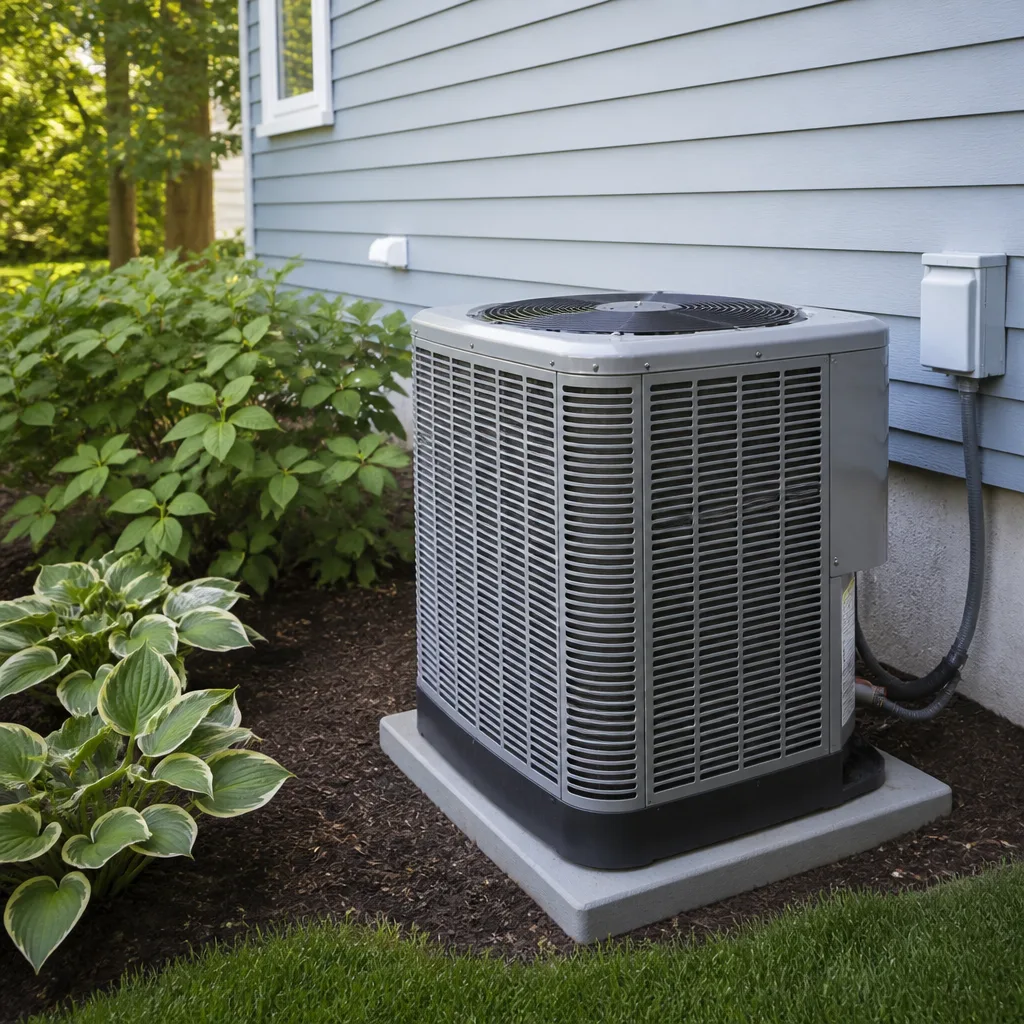 AC repair
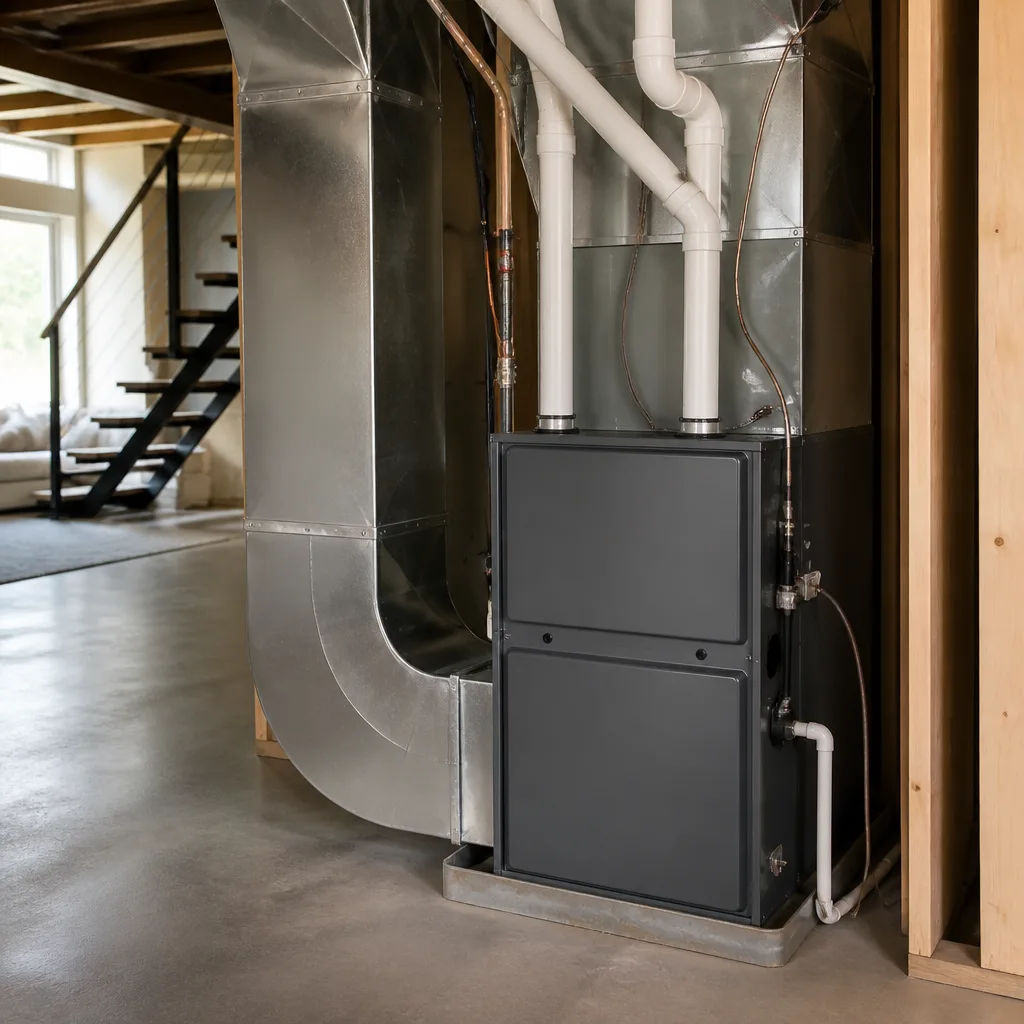 Furnace & heating
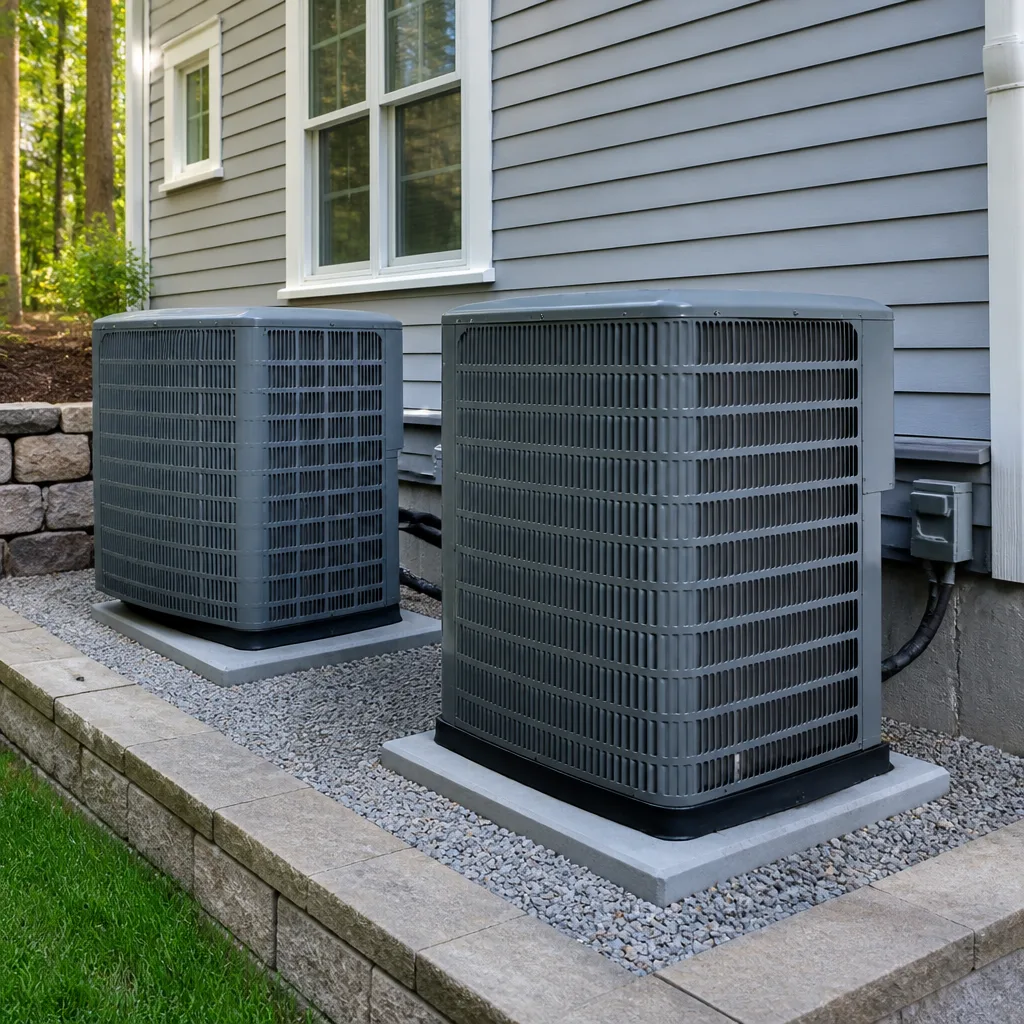 Heat pumps
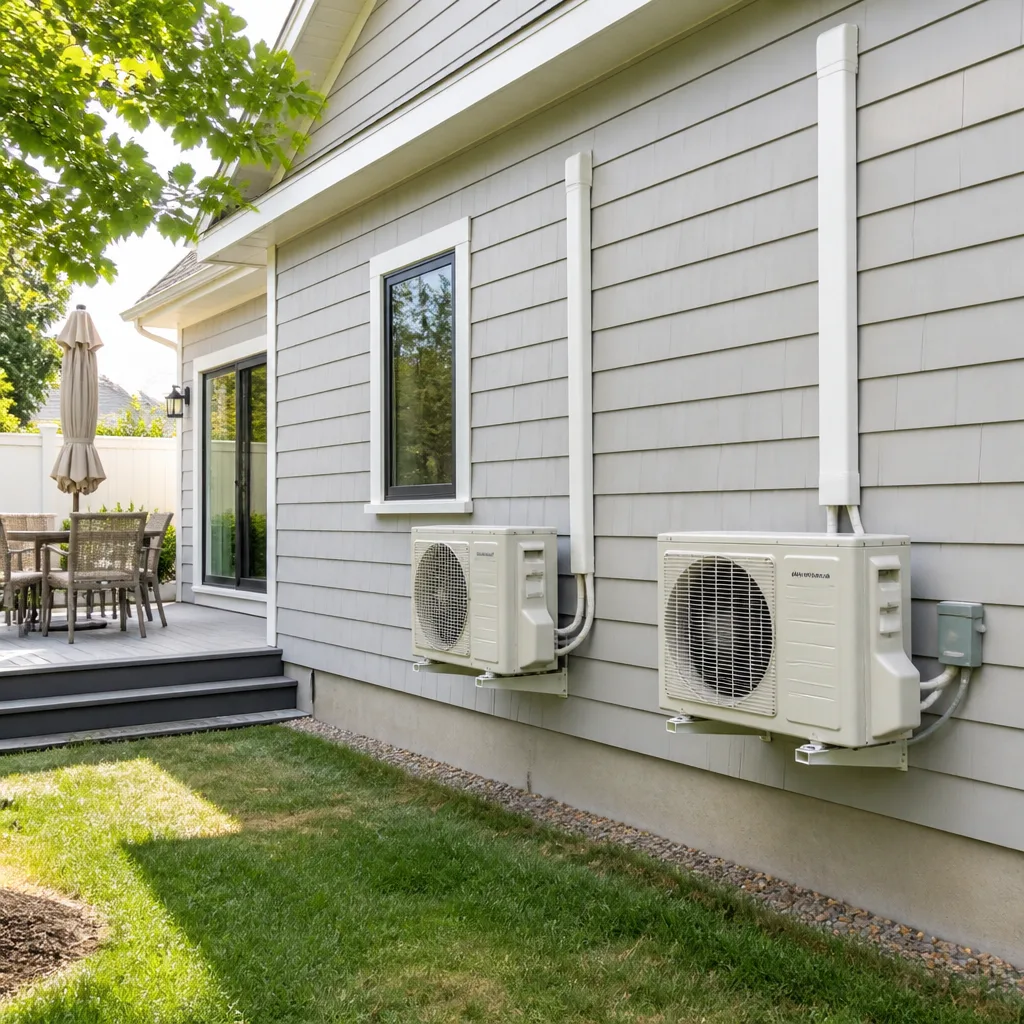 Ductless mini splits
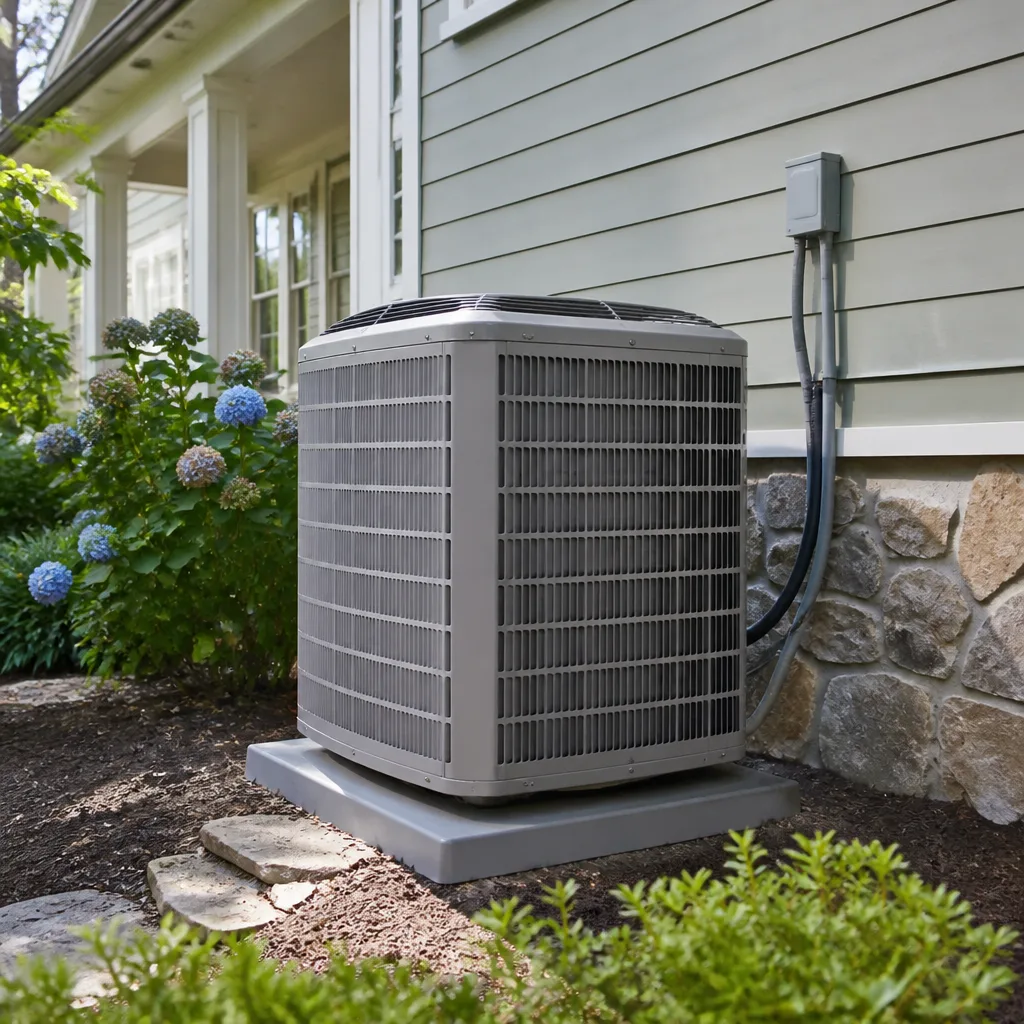 Carrier
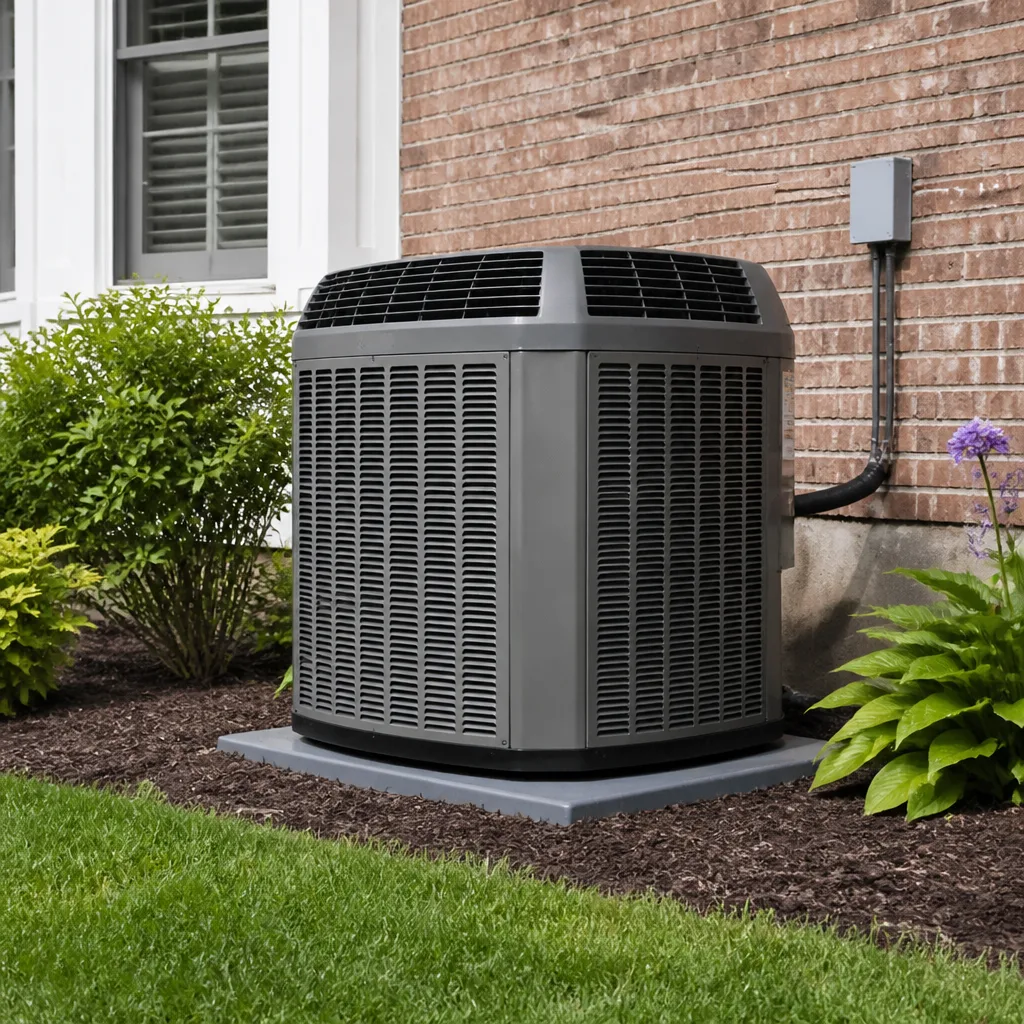 Trane
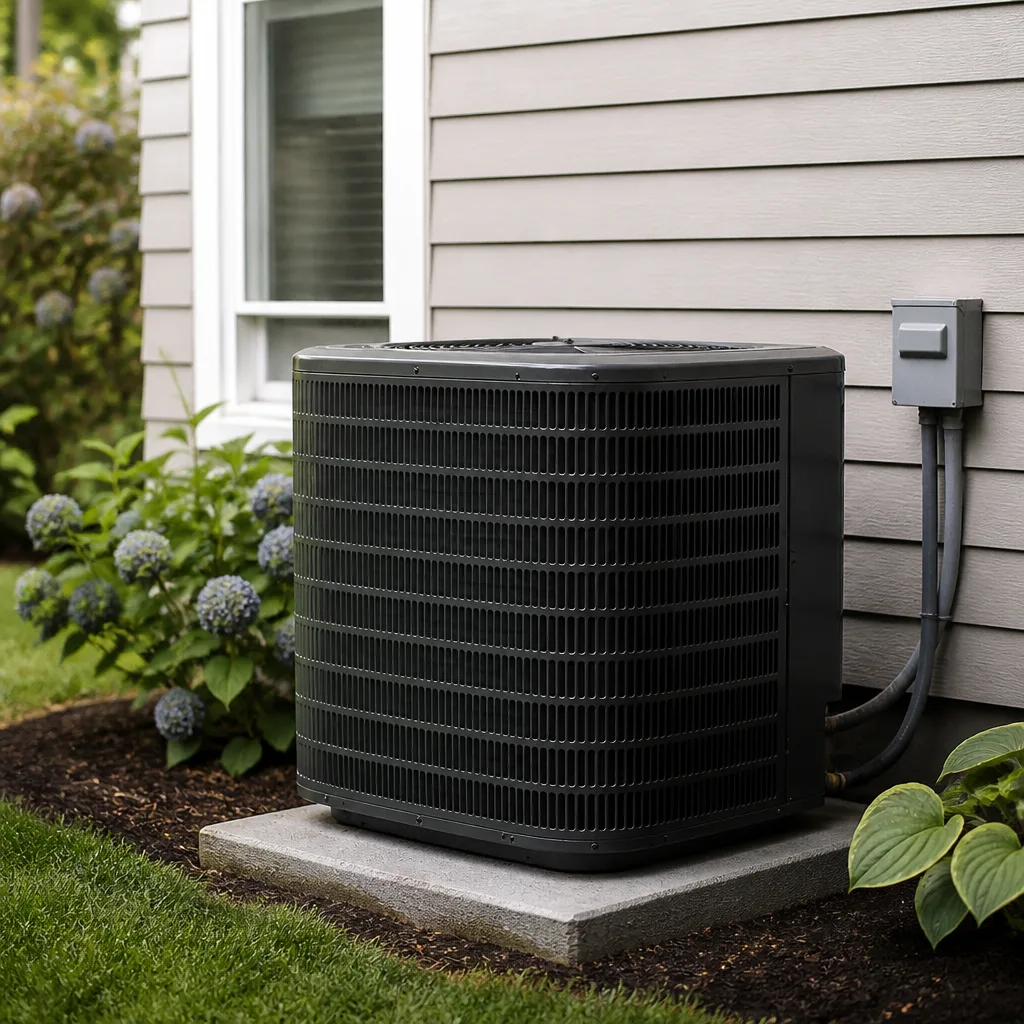 Goodman
Seasonal tune-up and full diagnostic on your Carrier, Trane, or Goodman system - readings shown to you before any repair is proposed
Diagnosis first, numbers second - you approve the repair price before a single part goes in.
Get your free estimateHVAC Emergency Preparedness Guide for Pasadena Homes
Most HVAC guides treat a failed system as an inconvenience. In Pasadena, TX, it can be something else entirely. This city sits in the middle of one of the densest stretches of petrochemical and refining activity in the country, and Pasadena and its neighbors have weathered more than one shelter-in-place order when something went wrong at a plant. A home is not automatically a safe box during those events. Depending on how your system is configured, it can either shield your household from outside air or pull contaminated air straight into your living room. Over the next several sections, we’ll walk through how to secure your system during a shelter-in-place, how to keep a Pasadena home tolerable when the AC fails in August heat, how to build a 72-hour HVAC kit, and how to find a contractor during a post-storm surge when every company in Southeast Texas is booked.
Quick Answer
During a shelter-in-place, set your thermostat to fan-off or system-off so the air handler stops pulling outside air, and close or seal any fresh-air intake or outside combustion air vent you can reach. If the AC fails during a heat event, consolidate everyone into the lowest, most interior room, block direct sun, and use cross-ventilation only when the outdoor air is safe. Preparedness is mostly about knowing your system before the emergency, not during it.
Styles & brands we work with
- AC repair
- Furnace & heating
- Heat pumps
- Ductless mini splits
- Carrier
- Trane
- Goodman
Table of Contents
- Shelter-in-Place: What to Do With Your HVAC System
- When the AC Fails During a Pasadena Heat Event
- Building a 72-Hour HVAC Emergency Kit
- Generator and Transfer Switch Planning for HVAC Load
- Finding a Contractor After a Storm Surge
- Heating Failures in a Pasadena Winter
- Preventive Checks That Head Off Most Emergencies
- Common Mistakes to Avoid
Shelter-in-Place: What to Do With Your HVAC System
A shelter-in-place order issued because of an industrial release is different from a weather order. You may have 15 minutes to react, and the air outside your door could be carrying something you don’t want inside. Here’s how to secure your HVAC system, in order.
- Set the thermostat to OFF, not AUTO. Auto will kick the unit back on when the temperature drifts, and if your system draws fresh air, that means starting the intake again.
- Switch the fan to OFF if the thermostat has a separate fan setting. Fan-on will circulate air through the ductwork and can pull supply-return leakage from outside. Fan-off stops that.
- If the system is mid-cycle when the order comes in, let it finish, then shut it off. It will finish a run in a few minutes. Don’t wait to shut it down entirely.
- Seal outside air intakes and combustion air vents. Look for a screened intake louver on your exterior wall, and for the small combustion air pipes near a gas furnace or water heater. Tape them shut with a heavy tape or plastic sheeting. If your furnace draws combustion air from inside the home, tape the outside vent only.
- Close all windows and exterior doors. Sounds obvious. It’s the first thing that’s forgotten when people are trying to move fast.
- Seal gaps around window AC units and through-wall sleeves. If you have a window unit, pull it out of the frame if you can, or tape around the gap and cover the outside face with plastic.
- Turn off clothes dryers, bath fans, and kitchen exhaust fans. Any of them will pull air into the house from outside as long as the exhaust side is running.
What you don’t want to do: run the system with the thermostat set to ON in an attempt to “filter” the air. A standard 1-inch filter captures dust and some larger particles, not dissolved chemical vapors. Running the fan during a shelter-in-place just moves whatever the system pulls into the living space. Filtering a chemical release takes activated carbon, which almost no residential unit has. The right move is to keep the outside air outside.
When you install or replace a system through AC installation in Pasadena, ask specifically whether the design pulls fresh air through a duct or intake. If it does, know where that intake is and practice sealing it once before you need to. That’s the kind of detail that separates a prepared home from a lucky one.
When the AC Fails During a Pasadena Heat Event
Pasadena summers push the mid-90s for weeks on end, and a cooling failure in that stretch becomes a heat problem inside the house within a couple of hours. What follows is the sequence we recommend for keeping a home tolerable for four to six hours while you’re waiting on service. It won’t make the house comfortable. It will keep it safe.
The first thirty minutes
- Turn the system off entirely at the thermostat. Leave a broken system with a fan running and you may be circulating hot air that a compressor problem is generating.
- Close every window and pull the blinds or shade on the south and west facing ones. Sun through glass is the largest single source of heat gain in a Pasadena home in the afternoon.
- Turn off the oven, stove, dishwasher, washer, and dryer. Appliances that heat or move water add heat. Cooking and laundry can be deferred.
- Consolidate everyone into the lowest and most interior room you’ve got. A low interior room stays a few degrees cooler than the rest of the house. On a two-story home, that means downstairs; if the house has a bathroom or hallway with no exterior walls, choose that.
- Turn on ceiling fans and box fans in the room you’ve chosen, not throughout the house. Moving air increases evaporative cooling on skin. Point a fan at the window during cooler evening hours to pull outside air in when it’s actually cooler outside than inside.
Managing internal heat for the next few hours
Once you’ve consolidated, the goal is minimizing new heat inside. Keep doors between the occupied room and the rest of the house closed. If you have a wet towel or a cool shower, damp skin plus moving air is the most effective passive cooling you have. Drink water; dehydration sneaks up on people during an indoor heat event. Text or call family who live nearby to see if they have a cooler home, but don’t leave the house for an unfamiliar location during a heat advisory without a plan, especially if children or older adults are in the household.
If someone in the household shows signs that concern you such as confusion, a halt in sweating, or fainting, treat it as a medical emergency and call 911. Heat illness is not something to ride out. Fast dispatch from 7am to 7pm is the general window for our Pasadena-area technicians, and a call that comes in outside those hours is booked into the next opening, Sunday through Friday, 7am to 7pm. Call (866) 982-5097.
Building a 72-Hour HVAC Emergency Kit
Most emergency kits assume the worst case lasts three days. That’s a reasonable target for a post-storm outage in Pasadena, where a serious thunderstorm or tropical system can take the grid down for 48 hours or more. Here’s what we recommend keeping in one bin near the air handler.
- Two spare air filters sized to your system. A dirty filter is a common cause of frozen coils and reduced capacity once the system is running again. Know your size, don’t keep a stack of the wrong one.
- A plug-in indoor thermometer. One that runs on its own battery or plugs into a wall. It tells you when the house is drifting toward unsafe, not just “warm.”
- An emergency contact card. Write down the model and serial number of your outdoor unit and your furnace, the filter size, the breaker size for the air handler and the condensing unit, and a contractor phone number. Keep it in a zipper bag.
- A circuit breaker map. If your panel isn’t already labeled, walk through it now. Label the AC, furnace, and any air handler circuit. If you’re unsure of a breaker, don’t guess; get it labeled by someone qualified.
- Heavy tape and plastic sheeting. Sized so you can seal an outside air intake or a through-wall sleeve quickly.
- A portable fan hierarchy. Write down which fans you’ll use in what order. In our experience, the wins are these: a box fan in the consolidated room first, an oscillating floor fan second, and a small USB or battery fan last for night use. Battery backup fans drain fast; assume you’ll be using them for a few hours, not three days.
- Bottled water. Not HVAC specifically, but the number of households we’ve seen with a broken system and no drinking water ready is not small.
Review the kit once a year. Filters get used for other things, tape goes missing, and the model numbers on the card drift if you’ve had a system replaced. This is the kind of housekeeping that separates a prepared homeowner from someone on the phone at 10pm trying to remember what brand their furnace is.
Generator and Transfer Switch Planning for HVAC Load
Whole-home backup that runs the air conditioner is expensive. Partial backup that runs the furnace, refrigerator, and a few fans is not. The right answer depends on what you’re backing up and how it’s wired. Here’s how to think about it.
What it costs to back up HVAC load
- Portable generator + manual transfer switch (partial backup): A small gas generator and a manual transfer switch sized for a few circuits. This won’t run central AC, but it will run lights, the fridge, and fans. Expect a professional install to run in the low thousands, plus the generator itself.
- Standby generator sized for the full house: A permanently installed natural gas or propane standby unit sized for central AC plus the rest of the home. The install cost varies widely with the electrical work required and the panel capacity, but it’s typically a five-figure project. A standby unit also needs its own annual service, and it needs to be sized to start the compressor without a brownout.
- Inverter-driven HVAC and soft-start kits: Modern variable-speed equipment draws less at startup than a single-stage compressor. A soft-start kit on an existing compressor reduces inrush current. Both matter if you’re trying to size a generator and want a smaller unit to do the job.
What load shedding looks like
If you’re only powering part of the system, you’re going to need a rule about what runs when. The most common arrangement is: run the air conditioner and refrigerator while the sun is up, then switch the AC off and run lights and fans in the evening once the outdoor temperature has dropped. If you’re backing up heating instead of cooling, the priority inverts, and a furnace blower plus a refrigerator is a small, achievable load. Talk through the actual wattage of your equipment with whoever’s installing the generator; the nameplate rating and the running load are not the same number.
One caution: never plug a portable generator into a home outlet or an existing circuit. Backfeeding is genuinely dangerous for anyone working on the lines and for anyone in the house. Use a proper transfer switch. If you don’t have one, run extension cords for specific devices and leave the panel alone.
Finding a Contractor After a Storm Surge
After a serious storm in Pasadena, every HVAC company in Southeast Texas gets booked within a day. When that happens, the difference between getting a proper repair and getting a bad one comes down to what you ask and what you check. Here’s the routine we recommend.
- Call more than one company and ask the same three questions. Do you service the brand I have? Is your written estimate the final price, or is it an estimate with charges on top? When can your technician actually be at my house?
- Get the estimate in writing before work starts. The final price is set by the written estimate, and the numbers on it should not change afterward without your approval.
- Verify the company is licensed and insured. Ask for proof and confirm it. Price-gouging in the days after a storm comes from unlicensed operators moving into an area, and the easiest defense is a request that gets made before they start work.
- Be wary of a price that’s dramatically below everyone else’s. A rock-bottom quote usually means corners on install quality (like undersized line sets or skipped nitrogen purges) that show up the next season.
- Ask what brand the technician is trained on. A technician who works across brands can diagnose the system in front of them. At Paragon AC Repair, our technicians have up to 9 years of experience and are certified to work on nine of the industry’s leading brands, including Paragon AC Repair equipment from Trane, Lennox, Goodman, and Rheem. Whatever brand you have, we know how to work on it.
- Don’t sign a work order with blank line items. If parts are going to be added later, get them written into the estimate with a price.
- Take photos before and after. A dated photo of the serial plate on your unit and the work area is cheap insurance on both sides.
One more: if the surge hits during a weekend, understand that the industry generally runs on the same calendar. The Saturday wait is real, and calling the biggest number of companies is not always better than calling a smaller one with real availability on Sunday.
Heating Failures in a Pasadena Winter
Pasadena winters are mild, and that’s exactly why heating failures catch people off guard. A furnace that heated fine through a mild December can fail on the first hard cold snap, and the house is never as prepared as the household thinks it is. If your furnace stops on a cold evening, here’s the sequence.
First, check the thermostat is calling for heat and the breaker isn’t tripped. If the unit is gas and the burner won’t light, don’t attempt anything past that at the panel. Gas line work, combustion diagnostics, and anything involving the heat exchanger are jobs for a licensed technician; a botched repair on a gas appliance is a genuine safety issue, not a repair that goes wrong. Turn the system off if you smell gas and call your gas utility, then call us. Our furnace repair technicians handle combustion-side diagnostics and know how to test a heat exchanger safely.
While you’re waiting, consolidate the household into one room and close the doors to the rest of the house. Use blankets, and if you have a fireplace that’s properly vented, use it, but don’t leave it burning unattended overnight. If the temperature indoors approaches freezing, drip a faucet to protect the pipes. In the mild climate here that’s a rare case, but it does happen on a hard cold snap.
If a furnace is old enough that the repair cost approaches the replacement cost, get a written replacement estimate before you sign a big repair. furnace repair and replacement are both services we run, so there’s no pressure to pick one over the other. The right fix is whatever your situation calls for.
Preventive Checks That Head Off Most Emergencies
Most HVAC emergencies we hear about did not arrive without warning. They built up over weeks in a filter that got neglected or a capacitor that had been slowly degrading. A short preventive routine catches most of them.
- Change the filter every 30 to 60 days in cooling season. In Pasadena, the dust and pollen load in the air means a clogged filter can happen faster than the calendar suggests. Check it monthly during the summer.
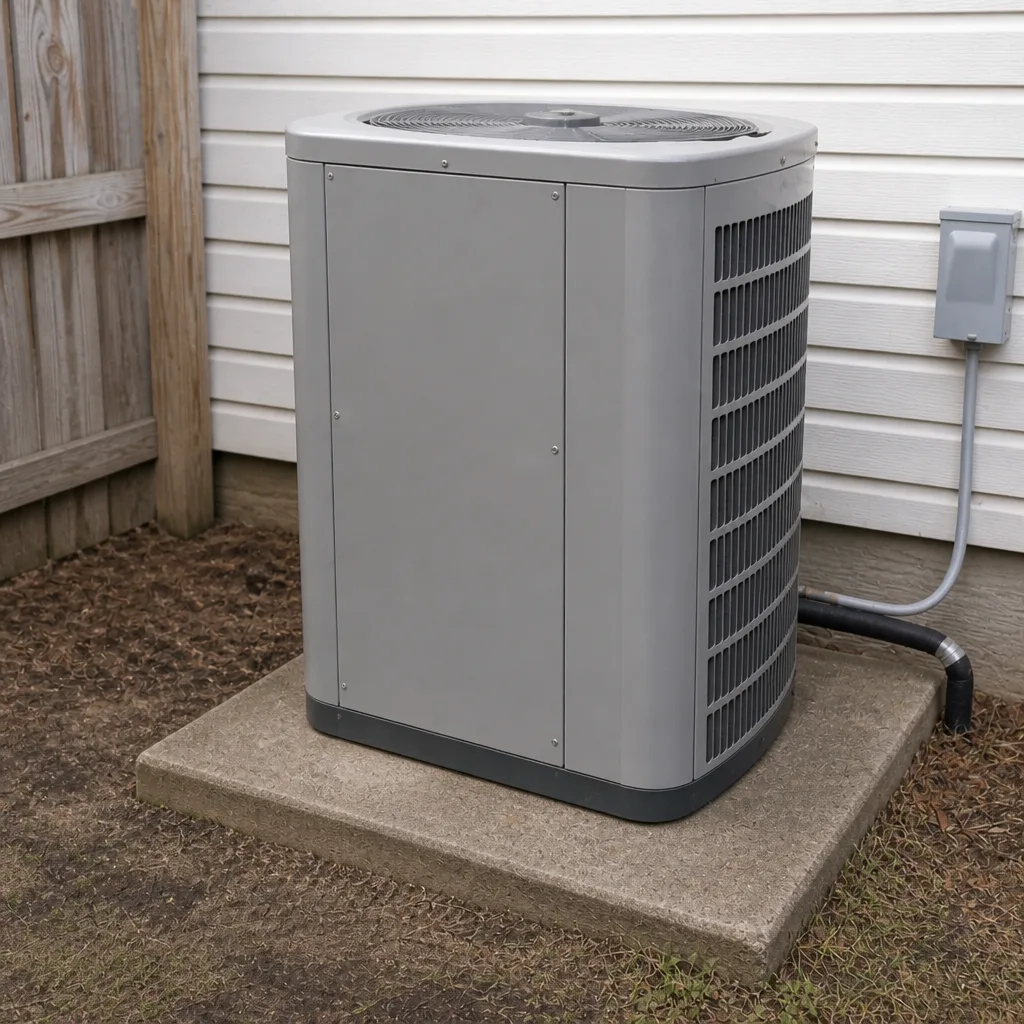
- Clear the outdoor unit’s surroundings. Two feet of clearance on all sides, and no climbing plants or debris blocking the coil. A condenser that can’t reject heat runs harder and fails sooner.
- Listen for the system when it starts. A click, a hum that lasts too long, or an unusual rattle at startup is worth investigating before the system fails outright. It’s a much smaller visit than a mid-summer breakdown.
- Have the system checked before each season. A spring check before the first sustained heat and a fall check before the first cold snap catch small problems while they’re still small.
- Write down the model and serial number of both indoor and outdoor equipment. In an emergency, having this in hand means less time on the phone and faster parts identification.
- Test your carbon monoxide detectors. If you have a gas furnace, this belongs on the same checklist as the smoke detectors.
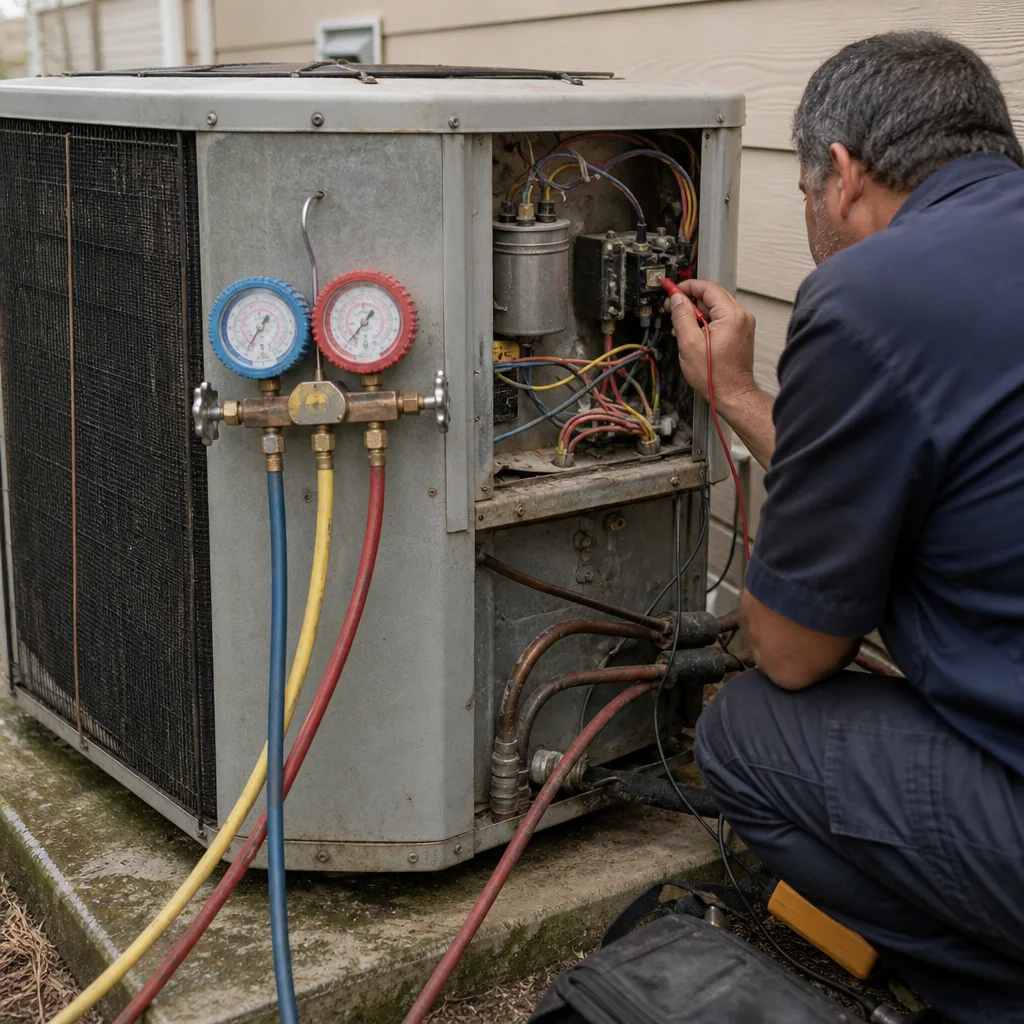
When you need a technician who has done this work on Pasadena homes, ask what the checkup includes. A real one tests refrigerant pressures, electrical components, drain lines, and the heat exchanger, and the technician writes down what was found. Anyone who “checks it over” and doesn’t hand you a report hasn’t done a real checkup.
Common Mistakes to Avoid
- Running the fan during a shelter-in-place “to filter the air.” A standard 1-inch filter captures dust, not airborne chemicals. Running the fan moves contaminated outside air into the house. Turn it off.
- Waiting to seal an outside air intake until you need to. If you’ve never located the intake for your system, you’ll be looking for it during the 15 minutes you have to react. Find it now and tape it once as a test.
- Leaving the AC running when it’s clearly failing. A frozen coil, a compressor short-cycling, or a burning smell at the outdoor unit means off, not “let it see if it comes back.” Running a broken system usually increases the repair cost.
- Choosing a contractor on price alone after a storm. In the post-storm surge, the lowest quote is often from someone without local licensing or insurance. Ask for both, and get the estimate in writing before work starts.
- Backfeeding a portable generator through a dryer outlet or a wall receptacle. This is dangerous for anyone working on the lines and for the household. A proper transfer switch or extension cords are the only safe ways to use a portable generator.
- Buying a “one brand” fix when your system is another brand. A technician who only works on one manufacturer’s equipment will be learning on the job or steering you toward a brand they can sell. Look for a company that works across brands.
- Skipping the furnace check in a mild winter. In Pasadena, a furnace that goes unserviced for years can fail on the first genuinely cold night, which is also the night every other homeowner in the area is calling the same contractor.
See the difference
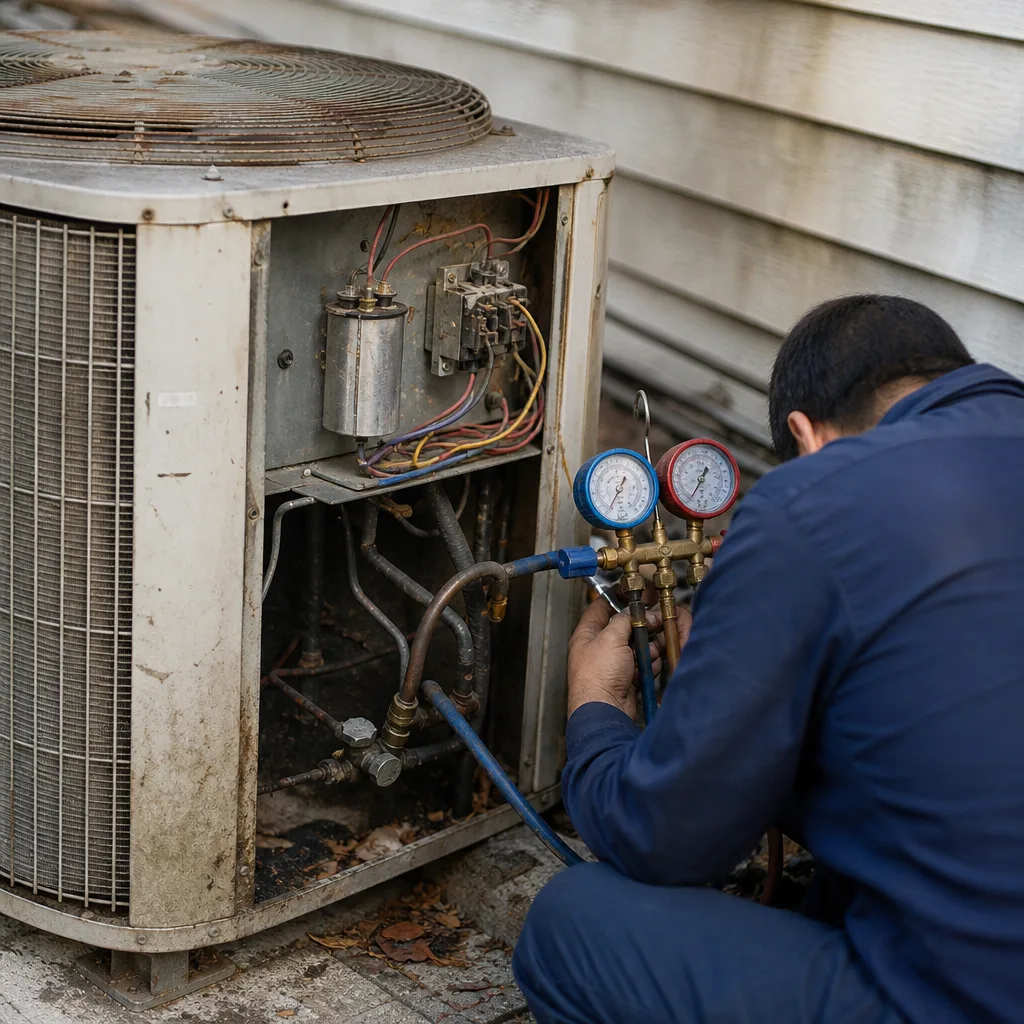
 Before
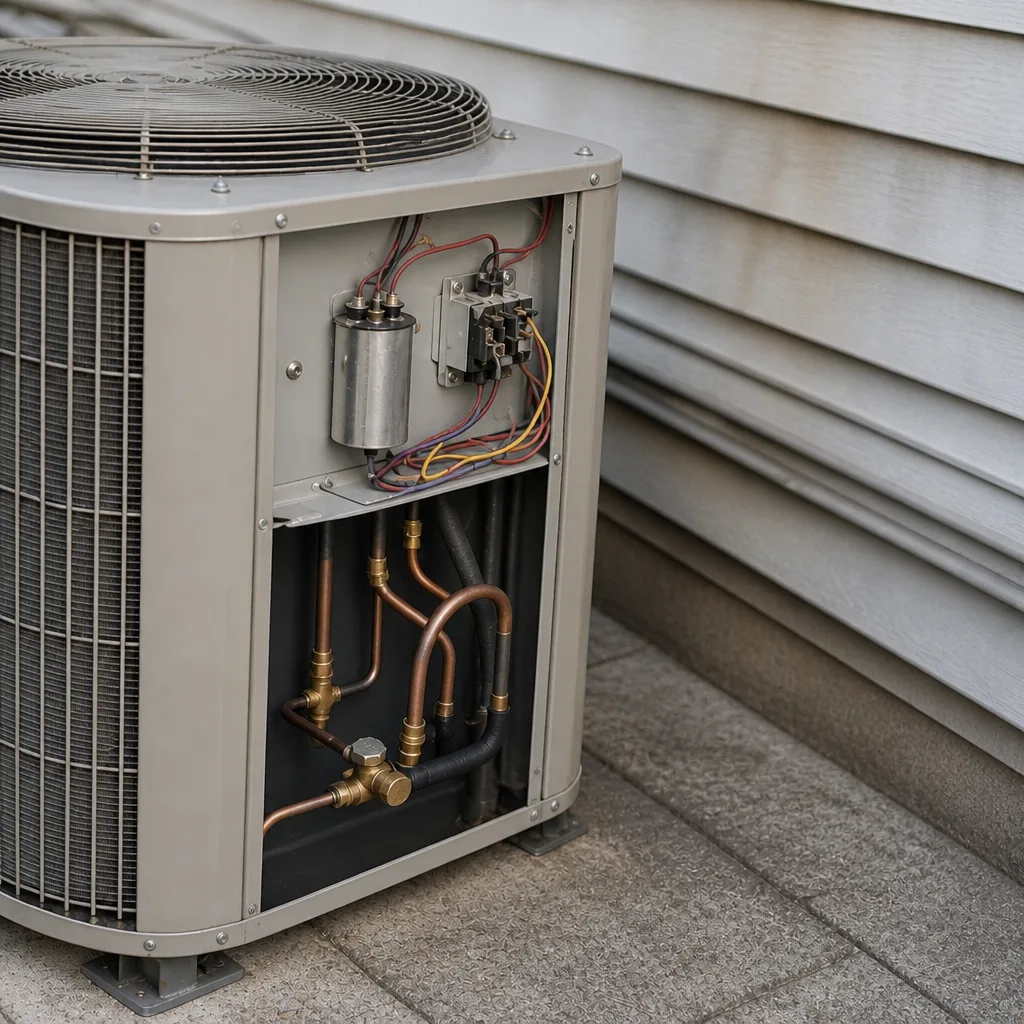
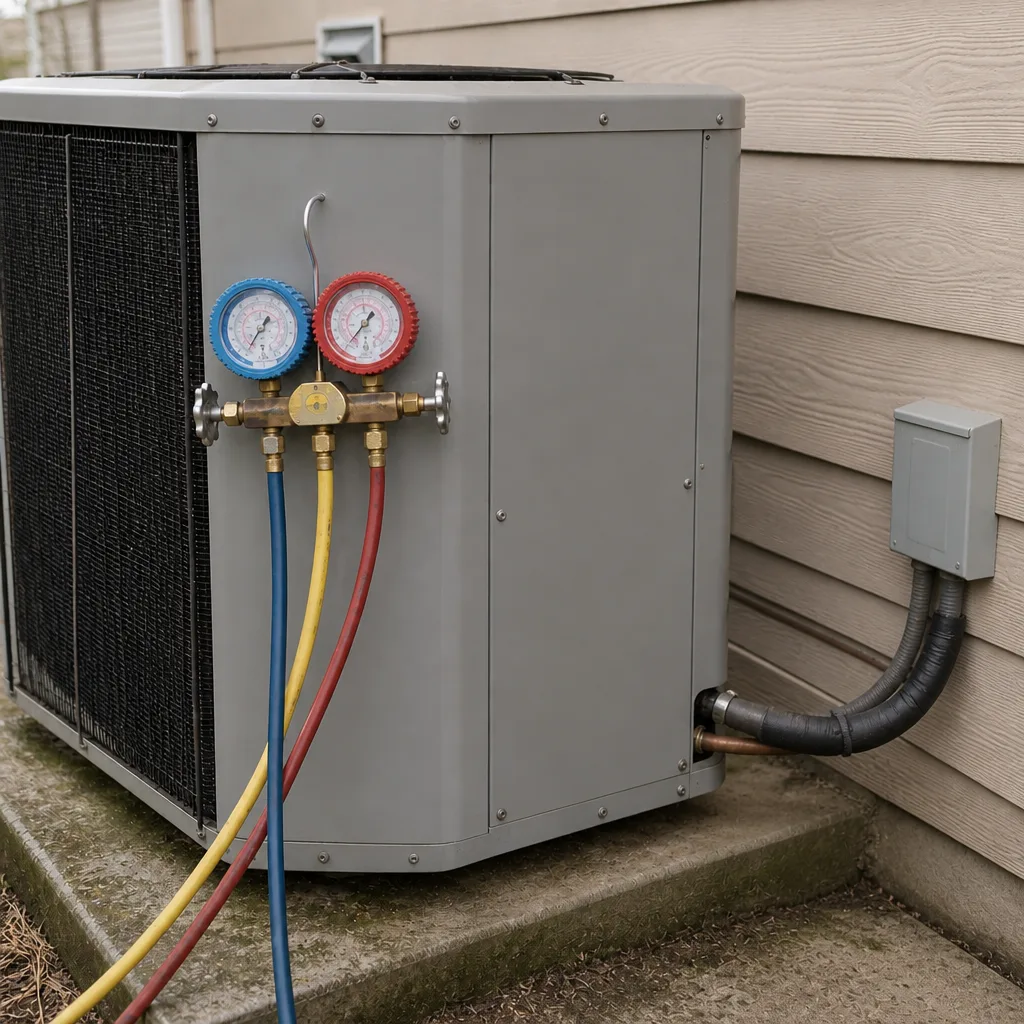 After
 Before
 After
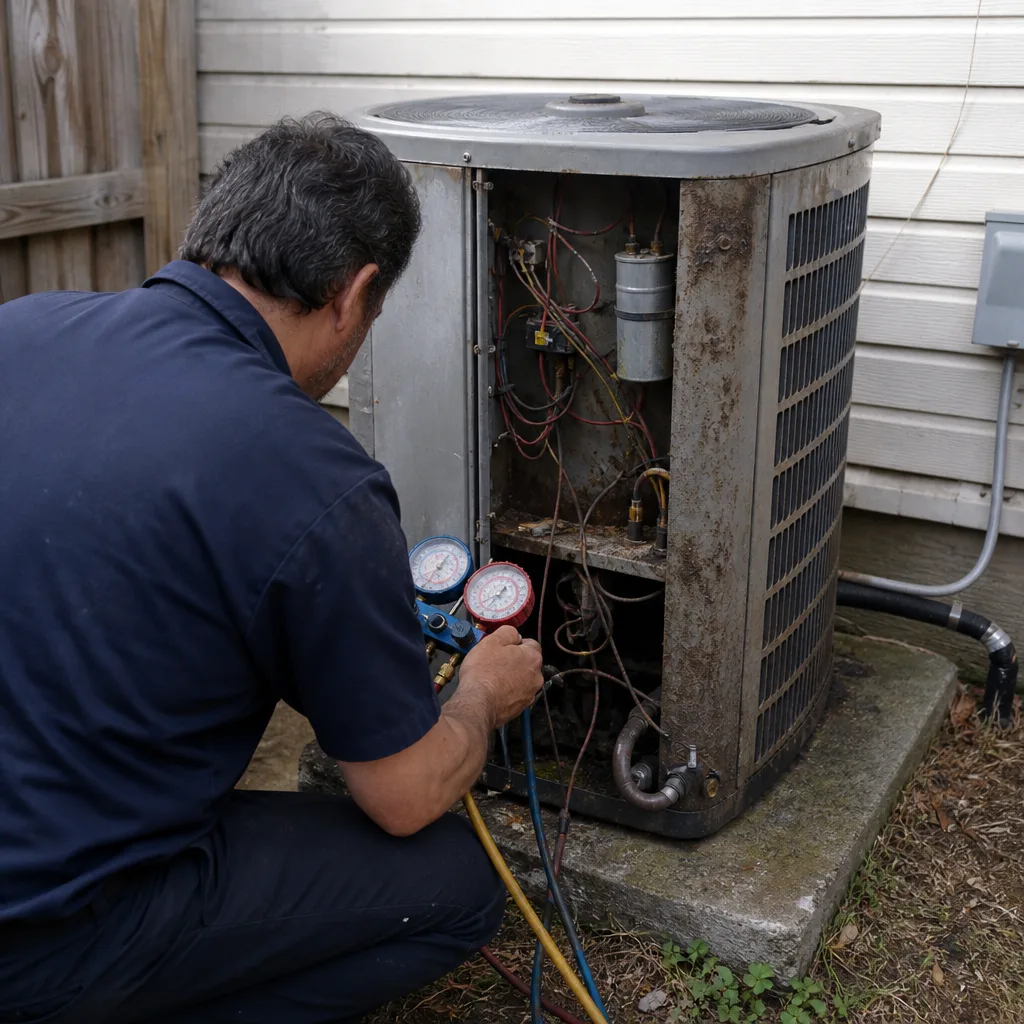 Before
 After
When to Call a Professional
Some HVAC problems are safe to look at. Others aren’t. Call a professional if your furnace won’t ignite, if you smell gas, if the outdoor unit is humming but not spinning, if there’s water pooling near the air handler, or if the system trips a breaker after a reset. Call immediately if you find soot around the furnace or your carbon monoxide detector goes off. Electrical panel work, gas-line work, combustion diagnostics on a furnace, and refrigerant handling are all jobs for a licensed technician; they’re not something to work through on your own.
Paragon AC Repair offers free estimates in Pasadena. We work across the full system lifecycle, so a small repair today doesn’t turn into an upsell tomorrow. Heating or cooling, we handle both, and one contractor covers every season. Call (866) 982-5097 for a free estimate. We answer 24/7.
Frequently Asked Questions
Turn the thermostat to OFF, set the fan to OFF, and seal any outside air intakes or combustion air vents you can reach. Close windows, doors, and any gaps around window AC units or through-wall sleeves. Running the system fan during a shelter-in-place pulls outside air into the house, which is the opposite of what you want. If you need help identifying your fresh air intake, call us at (866) 982-5097 and we’ll walk you through where it typically is on your system.
Four to six hours of reasonable indoor conditions is typical in a shaded single-story home with the actions in this guide, and shorter in an upstairs room or a home with west-facing glass and no shade. Consolidating into one low interior room and blocking sun makes the biggest difference. If someone in the home is showing signs of heat illness, call 911 rather than waiting for repair.
It depends on the age of the system, the cost of the repair, and whether the failure affects the compressor or the heat exchanger. If the repair cost is approaching what a new system would cost, look at both options. We can quote repair and replacement in the same visit so you’re comparing real numbers, not a guess. Call (866) 982-5097 for a free estimate and we’ll lay out both without pushing one way.
Generally no, not on a small portable generator, and never through a backfeed. A central air conditioner draws more starting current than a common portable unit can supply. If generator backup is a priority, look at a properly sized standby unit or a soft-start kit on the compressor. Talk through the load calculation with whoever installs the generator; the nameplate rating is not the same as the running load.
Call several companies and ask the same three questions: do you service my brand, is your written estimate the final price, and when can a technician actually be there? Ask for proof of licensing and insurance before work starts. Get the estimate in writing before work begins. Avoid a quote that’s dramatically lower than everyone else’s, since that usually means shortcuts on install quality.
Our technicians are certified to work on nine of the industry’s leading HVAC brands, including Carrier, Trane, Lennox, Goodman, Rheem, York, Daikin, Bryant, and American Standard. That means the technician who arrives diagnoses the equipment in front of them, not a preferred brand. Whatever brand you have, we know how to work on it. Call (866) 982-5097 for a free estimate.
The Bottom Line
The emergencies that matter most in Pasadena come in two flavors: industrial incidents and weather events. The HVAC actions for both are the same at the root: know your system, know how to shut it down safely, and know what you’ll do with the household before you need to. A shelter-in-place order moves fast. A heat event after a storm is often on the same calendar as everyone else’s call for help. Preparedness is mostly the work you do the other 360 days of the year: filter changes, seasonal checkups, a labeled breaker panel, a written contact card, and a plan that the household has actually practiced. Our technicians have up to 9 years of experience and can help you plan a system that protects the home on both fronts. Call (866) 982-5097 for a free estimate. We answer 24/7. Fast dispatch from 7am to 7pm, Sunday through Friday.
Written by the team at Paragon AC Repair.