
Last updated November 15, 2026
 AC repair
 Furnace & heating
 Heat pumps
 Ductless mini splits
 Carrier
 Trane
 Goodman
Seasonal tune-up and full diagnostic on your Carrier, Trane, or Goodman system - readings shown to you before any repair is proposed
Diagnosis first, numbers second - you approve the repair price before a single part goes in.
Get your free estimateThe Complete AC Installation Guide for Pasadena Homeowners
Most AC systems in Pasadena fail early for a reason that has nothing to do with the brand on the box. They were sized by square footage. A contractor multiplies your floor plan by a rule of thumb, picks the closest tonnage, and moves on. That shortcut ignores how hot your attic actually gets, how leaky your ducts are, and the humidity that hangs over this part of Texas and never quite leaves. In this guide we walk through what a properly engineered installation looks like in Pasadena, from the load calculation and the permit to the final checklist a technician should run before the job is called done. You’ll learn how to read a Manual J report, spot red flags in a contract, and ask the right questions before you sign anything.
Quick Answer
A correct AC installation in Pasadena starts with a room-by-room Manual J load calculation, not a square-foot guess, and follows with a city permit, a properly sized and sealed duct system, and a documented start-up checklist. The unit matters, but the sizing, ductwork and installation quality around it decide how long the system lasts and how well it handles local heat and humidity. Get those steps right and the equipment lives up to its rating.
Styles & brands we work with
- AC repair
- Furnace & heating
- Heat pumps
- Ductless mini splits
- Carrier
- Trane
- Goodman
Table of Contents
- Why Sizing Comes Before Shopping
- How to Read a Manual J Report
- The Pasadena Climate and What It Does to Equipment
- Permits and Inspections in Pasadena
- Attic Placement and Duct Routing in Slab Homes
- The Installation Checklist
- What Affects the Cost of an Installation
- Common Mistakes to Avoid
Why Sizing Comes Before Shopping
The single decision that shapes everything else is the size of the system. Oversize an air conditioner and it cools the house fast, then shuts off before it has pulled the moisture out of the air. You end up with a house that feels cold and clammy at the same time. Undersize it and the system runs nonstop on the hottest afternoons, never quite keeping up, wearing itself out in the process. Neither problem shows up on the day of installation. Both show up two or three summers later.
In our experience around Pasadena, the sizing shortcut is the most common cause of a disappointing installation. The fix isn’t complicated, but it takes time, and time is what a quick bid skips. Here’s what a proper sizing process includes:
- Room-by-room measurements of square footage, ceiling height and window area.
- Window orientation and glazing, since a west-facing window loads a room very differently than a north-facing one.
- Insulation levels in the walls and attic, plus a look at how much air the house leaks.
- Duct location and condition, because ducts running through a hot attic lose capacity before the air ever reaches a room.
- Occupancy and appliance load, which shift how much cooling a given room actually needs.
A contractor who quotes you a system over the phone without visiting and measuring is guessing. That guess might land close. It might not. And when it doesn’t, you’re the one living with it. If you’re comparing bids right now, our guide on AC installation explains the process we follow from the first visit through start-up.
How to Read a Manual J Report
Manual J is the industry-standard method for calculating how much heating and cooling a home actually needs. A proper report is a multi-page document, and while you don’t need to understand every line, a few numbers tell you whether the contractor did real work or filled in a template. Ask for the report before you sign. A contractor who won’t share it is telling you something.
What to look for:
- A total cooling load in BTUs, not just a tonnage. The report should show a sensible and latent load for the whole house and for each room. If all you see is “3 ton,” you’re looking at a sales sheet, not a calculation.
- Window and door inputs that match your house. Check that the window count and orientation match reality. A report with generic assumptions hasn’t been tailored to your home.
- An insulation and infiltration section. These numbers drive the result. If they’re missing or clearly defaulted, the load figure is unreliable.
- A duct loss figure. Ducts in an attic lose capacity, and a good report accounts for it. Skipping this step undersizes the equipment for what the rooms actually receive.
- A recommended equipment size that follows from the load. Run the math yourself: a load of roughly 12,000 BTUs per ton is the rough guide. If the recommended size doesn’t line up, ask why.
Red flags include a report that’s a single page, one that lists the same tonnage for every room, or a bid that includes no calculation at all. Those are the shortcuts that lead to callbacks and premature failures. A contractor who walks you through the report and can explain the numbers is one who understands the system they’re designing, not just the one they’re selling.
The Pasadena Climate and What It Does to Equipment
Pasadena sits close to the Ship Channel, and that proximity shapes which equipment makes sense here. The industrial corridor and the humidity that comes with living near the water mean outdoor coils and cabinets face a tougher environment than they would in a drier, cleaner setting. Corrosion is a real consideration, not a theoretical one.
Practically, that steers a few decisions:
- Coil material. Standard copper-aluminum coils are common, but in a humid, industrial environment, coated coils or all-aluminum designs hold up longer. Ask what coil construction is specified and why.
- Cabinet and fastener quality. A painted steel cabinet with corrosion-resistant fasteners will outlast a budget cabinet that starts rusting at the seams within a few seasons.
- Drainage. High humidity means the evaporator coil produces a lot of condensate. A properly sloped drain pan and a well-run condensate line prevent the water damage and mold that follow a poor install.
- Latent capacity. Because humidity here stays high, the system’s ability to remove moisture matters as much as its ability to cool. That’s another reason oversizing hurts: a short run cycle never dehumidifies properly.
Winters here are mild, so the heating side of the system gets a lighter workout, but it still matters. If you have a gas furnace paired with your AC, it pays to know its condition before the cooling season starts. Our furnace repair page covers what to check on the heating side. One contractor for both systems means fewer hand-offs when the seasons turn.
Permits and Inspections in Pasadena
A new AC installation is permitted work. The City of Pasadena requires a mechanical permit for a system replacement or a new install, and the work is subject to inspection before it’s signed off. This is not a formality. The permit protects you, because it means an inspector looks at the installation and confirms it meets code. A contractor who suggests skipping the permit to save time is asking you to carry the risk.
The typical sequence looks like this:
- Permit application. The contractor pulls the mechanical permit and, where required, an electrical permit for the disconnect and any new circuit. Ask for the permit number.
- Rough-in inspection. Depending on the scope, an inspector may check the refrigerant line set, the electrical connections and the ductwork before the system is closed up.
- Final inspection. After the equipment is installed and running, the inspector confirms the installation meets the adopted mechanical code. The contractor should be on site for this.
- Sign-off and documentation. You should receive the inspection sign-off along with the equipment manuals and warranty paperwork.
Ask upfront who pulls the permit and whether the fee is included in the written estimate. A reputable contractor includes it. A bid that’s silent on permits is one you’ll want to clarify before signing. We’re happy to walk through the permit process with you, and our Pasadena page covers how we handle local work.
Attic Placement and Duct Routing in Slab Homes
Most homes in Pasadena are built on slab foundations with the air handler and ductwork up in the attic. That’s the standard arrangement in Texas-style construction, and it creates a specific set of challenges. An attic here can reach punishing temperatures in summer, and any ductwork running through it loses cooling capacity before the air reaches a room. The placement of the equipment and the routing of the ducts move the needle on efficiency by a wide margin.
What a good installation accounts for:
- Duct insulation and sealing. Ducts in a hot attic should be well insulated and every joint sealed. Leaky ducts in the attic are effectively cooling the attic, not the house.
- Short, direct runs. The longer and more convoluted the duct run, the more pressure the blower has to overcome and the more capacity you lose. A good layout keeps runs short and turns gentle.
- Return air sizing. Undersized return ducts starve the system of air, which raises static pressure and strains the blower. The return side gets overlooked more often than the supply side.
- Platform and drain pan. The air handler should sit on a level, secure platform with a properly sloped drain pan and a secondary drain or float switch to catch overflow.
- Access for service. The equipment and the coil should be reachable for maintenance without tearing into the ceiling. Plan for it at install time.
If your home has a second story or a bonus room over the garage, the routing gets more complicated, and the design has to account for it. This is where a contractor’s experience in local housing stock shows. Whatever brand ends up in your attic, whether it’s a Goodman, a Rheem, a York or a Daikin, it will only perform to its rating if the duct system and placement are right.
The Installation Checklist
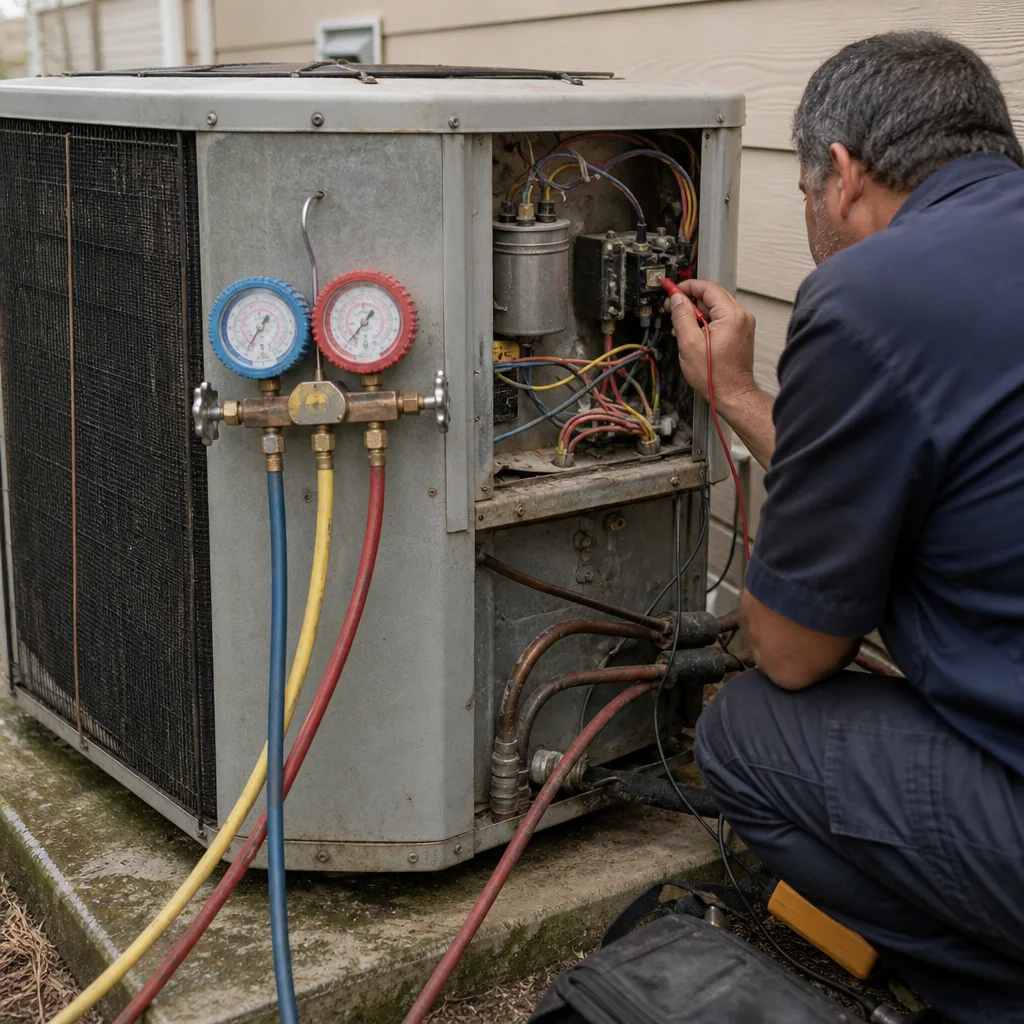
A completed installation should end with a documented set of checks, not a handshake and a bill. Ask for the start-up report. Here’s what a thorough technician runs through before calling the job done:
- Verify the equipment matches the load and the contract. Model and tonnage should match the Manual J recommendation, not a substitution made on the spot.
- Check the refrigerant charge. The charge should be set to the manufacturer’s specification, verified by superheat and subcooling readings, not just “it’s blowing cold.”
- Measure static pressure and airflow. The blower should move the design airflow without excessive static pressure. This is where duct problems surface.
- Confirm the temperature split. A proper return-to-supply temperature difference confirms the system is moving and cooling air as designed.
- Test the electrical connections. Tighten terminals, check the disconnect and confirm the breaker and wiring are correct for the equipment.
- Verify the condensate drain. Confirm the pan is sloped, the drain flows freely and the safety switch is wired and functioning.
- Check the thermostat and controls. Confirm staging, fan settings and the setpoints work as intended.
- Walk the homeowner through the system. Filter location, filter size, thermostat operation and the warranty terms.
- Provide documentation. The start-up report, the permit sign-off, the equipment manuals and the warranty registration.
Ask for this report as part of the estimate conversation, not after the install. A contractor who expects to produce it will build the job around it. We build our work to the Paragon standard, which means the checklist isn’t optional. It’s how the job gets signed off.
What Affects the Cost of an Installation
Installation cost in Pasadena varies widely, and a single number is misleading. The right way to think about it is to understand what moves the price up or down, then get a written estimate for your specific home. The estimate should break out equipment, labor, ductwork, permits and any additional materials. A fixed written price is what you sign; anything less is a guess.
Factors that shift the estimate:
- System size and efficiency. Higher-efficiency equipment costs more upfront but runs less. The right choice depends on how long you plan to stay and your usage.
- Ductwork condition. If the existing ducts leak or are undersized, sealing or replacement adds scope. Skipping it undermines the new equipment.
- Attic access and equipment location. A difficult attic access or a hard-to-reach air handler adds labor.
- Electrical and permit work. A new disconnect, a circuit upgrade or the permit itself all factor in.
- Brand and parts availability. Brands like Carrier, Trane, Lennox, Goodman, Rheem, York, Daikin, Bryant and American Standard all have their own equipment lines. The choice should follow the load, your budget and the available service support, not a sales incentive.
We quote by written estimate, with the price set per job. If you’re comparing bids, ask each contractor to itemize the same way so you can compare apples to apples.
Common Mistakes to Avoid
- Sizing by square footage. A rule-of-thumb calculation ignores window orientation, insulation and duct loss. Insist on a Manual J report for your specific home.
- Skipping the permit. Mechanical work in Pasadena needs a permit and an inspection. A contractor who suggests skipping it is putting the risk on you.
- Ignoring the ducts. A new unit connected to leaky, undersized ducts in a hot attic won’t deliver its rated capacity. Seal and route the ducts correctly as part of the install.
- Buying on brand alone. The right brand for you is the one that fits the load and has real local service support. A brand-agnostic contractor recommends what fits, not what pays.
- Accepting a verbal start-up. Ask for the documented checklist with charge, airflow and temperature-split readings. It protects your warranty and your investment.
- Overlooking humidity control. In Pasadena’s humid climate, latent capacity matters as much as cooling. An oversized system won’t dehumidify properly, and the house feels clammy.
- Ignoring corrosion risk. Proximity to the Ship Channel makes coil and cabinet material a real decision. Ask what’s specified and why.
See the difference
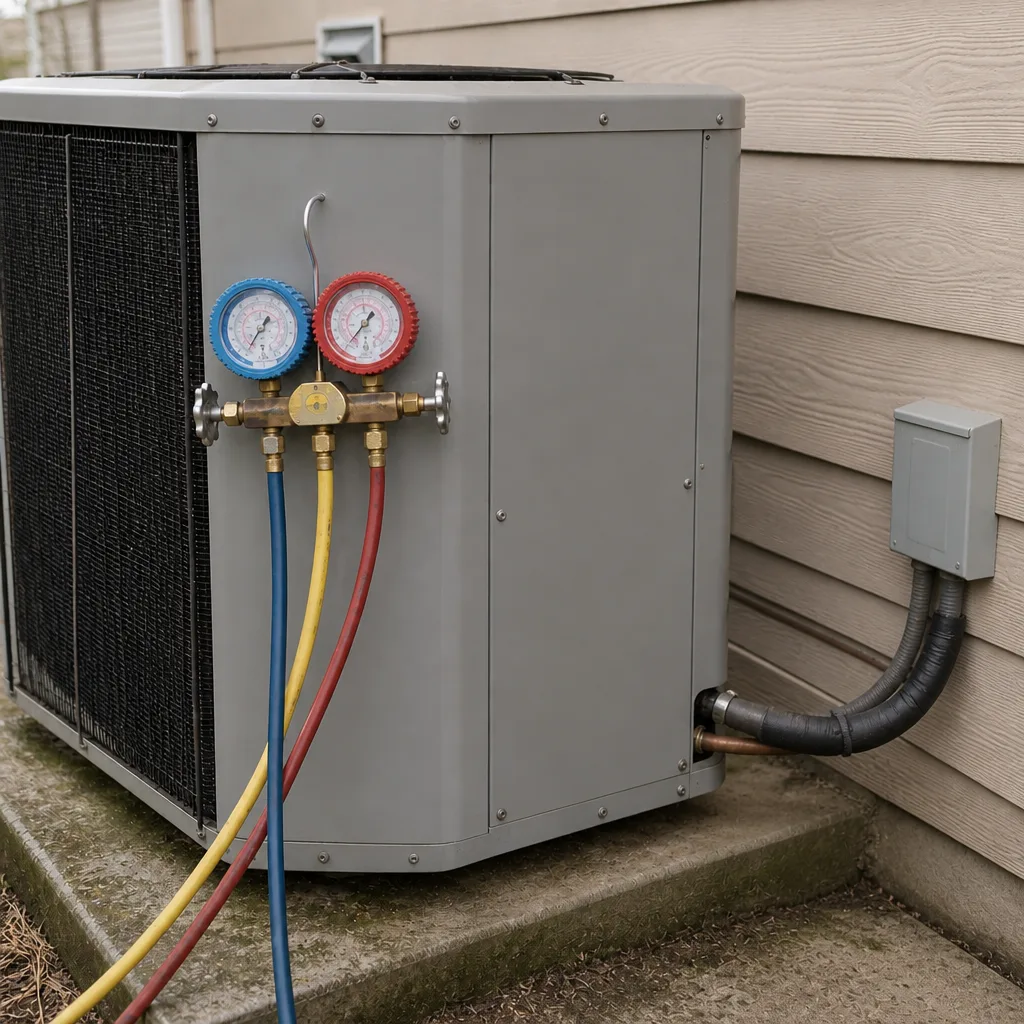
 Before
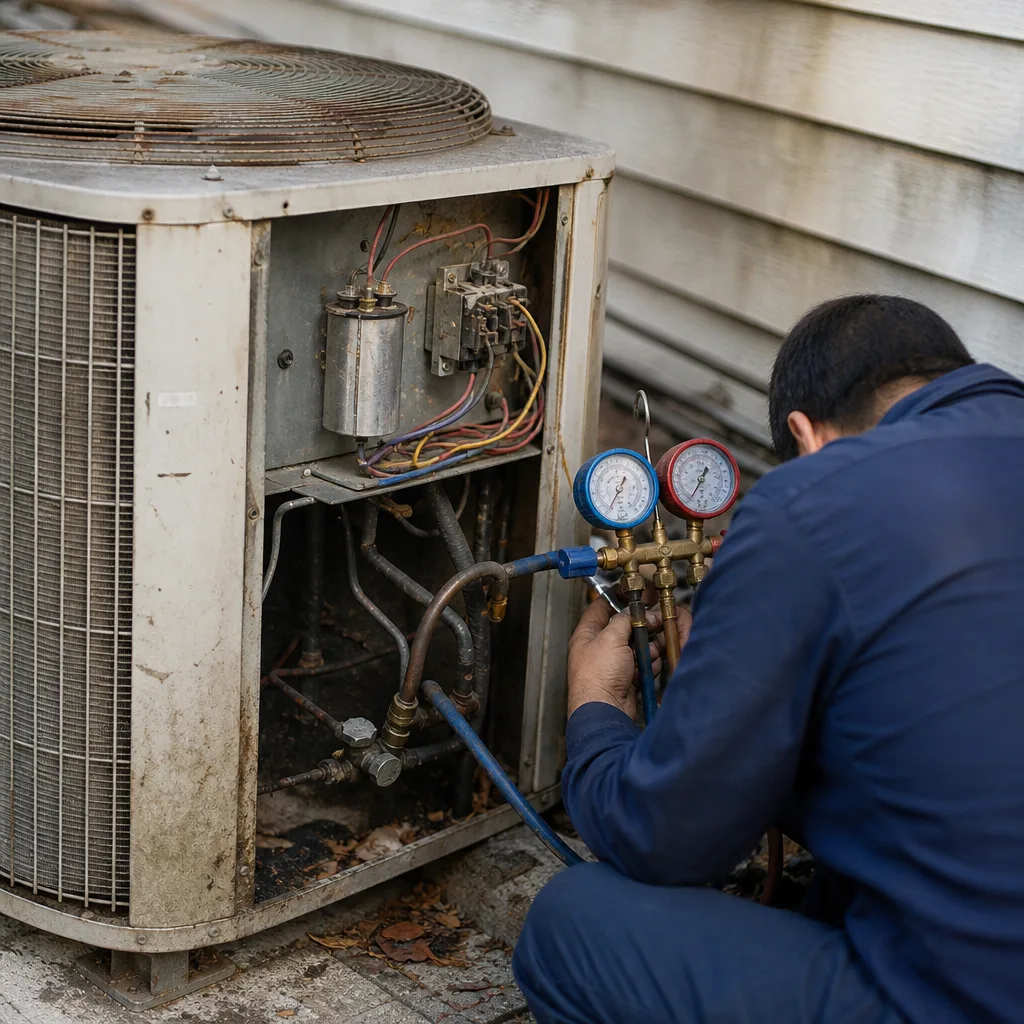
 After
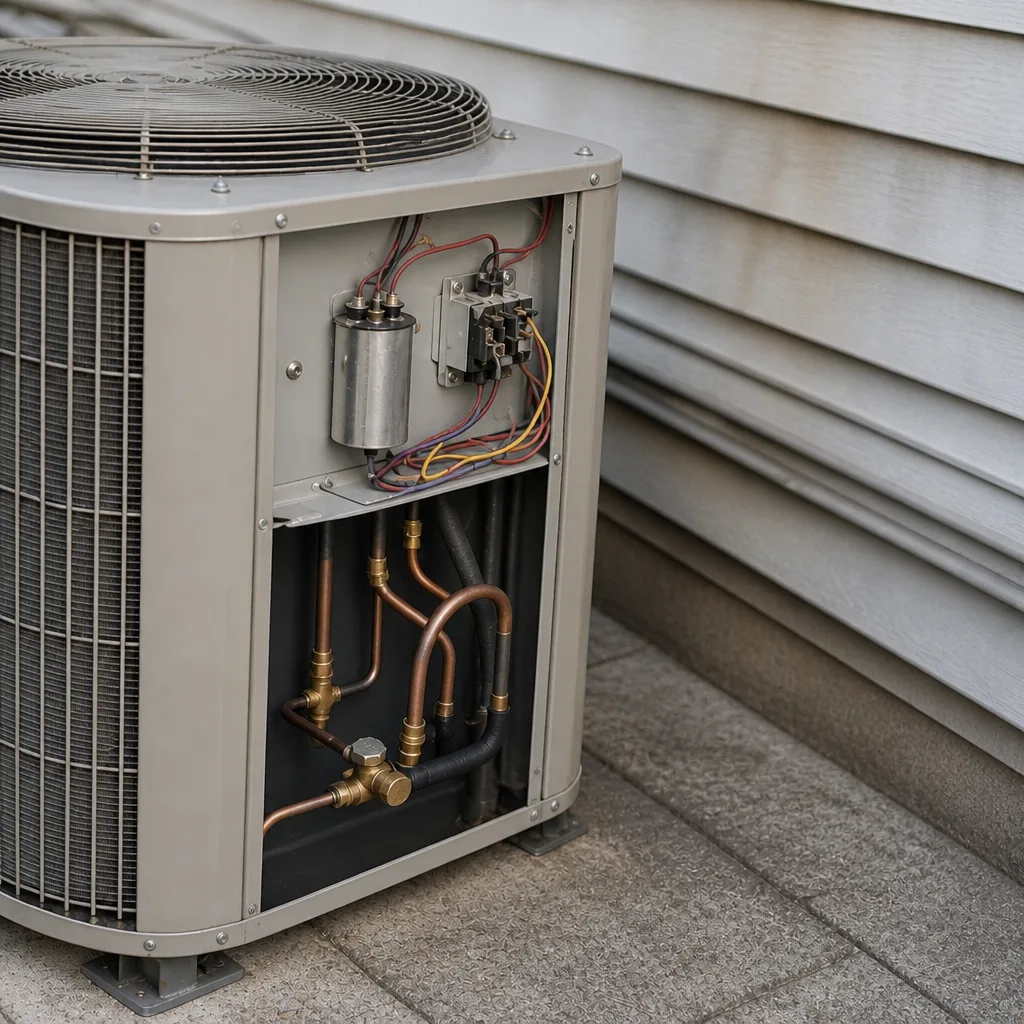
 Before
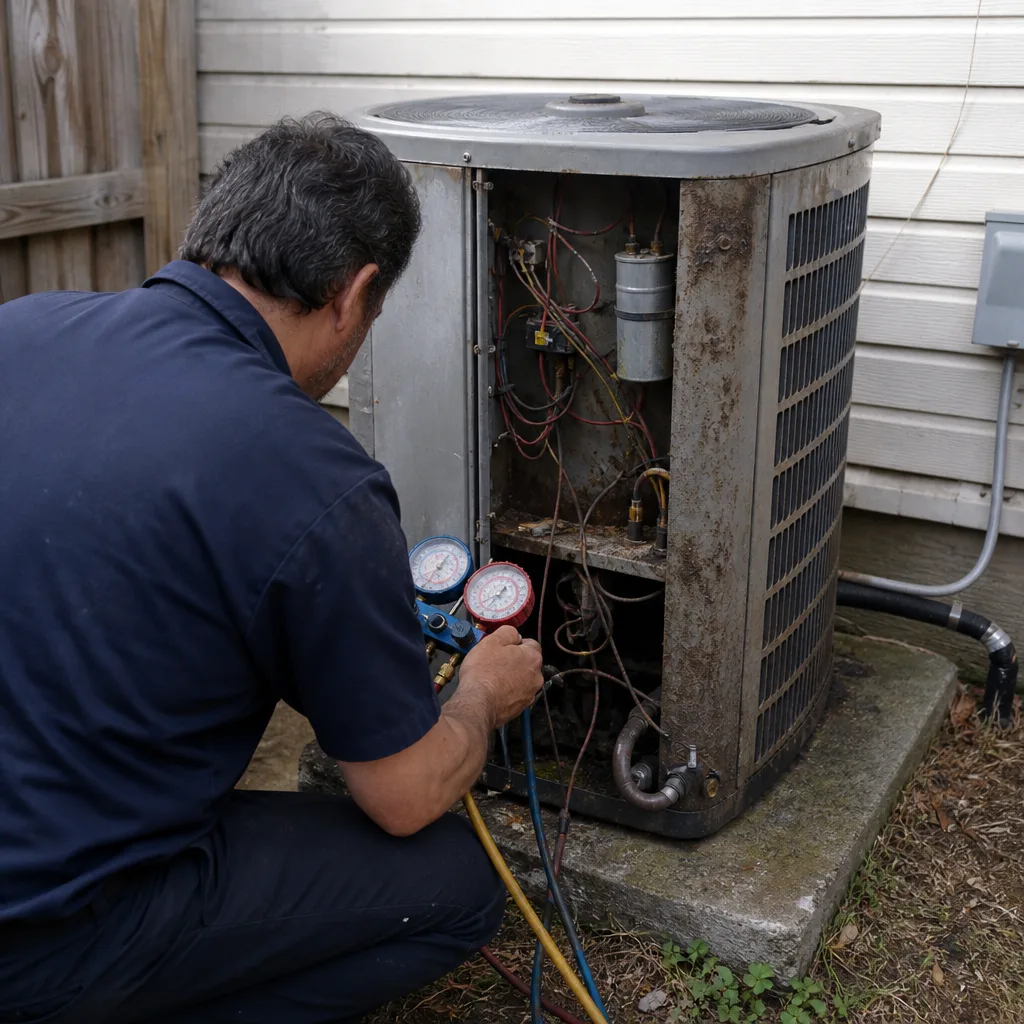
 After
 Before
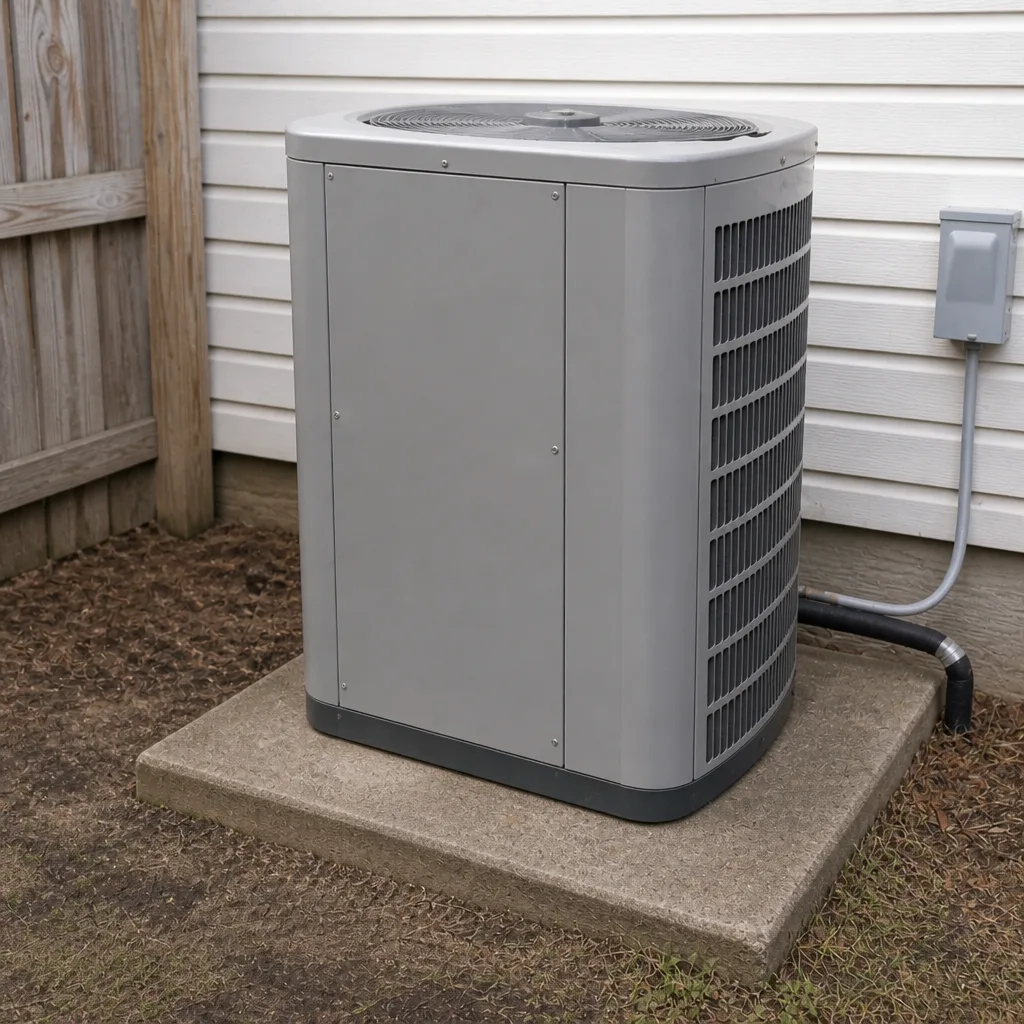 After
When to Call a Professional
Some AC work isn’t a weekend project. If your system is over a decade old and needing repeated repairs, if your energy bills are climbing without a change in usage, or if your home never quite reaches the set temperature on hot afternoons, it’s time to talk to a professional. Refrigerant work, electrical connections and permit-required installations are not the place to improvise. So is anything involving the gas side of a furnace. Our technicians have up to 9 years of experience, and we work on equipment from nine major manufacturers, so we can diagnose the system you have rather than the one we’d like to sell you. Paragon AC Repair offers free estimates in Pasadena. Call (866) 982-5097. We answer 24/7. Fast dispatch from 7am to 7pm, Sunday through Friday.
Frequently Asked Questions
A straightforward replacement typically takes a full day. If ductwork sealing, electrical upgrades or a permit inspection are involved, it can run into a second day. Your written estimate should include the expected timeline and the inspection steps. Call (866) 982-5097 to book an estimate and get a schedule for your home.
Yes. The City of Pasadena requires a mechanical permit for a system replacement or installation, and the work is inspected. A legitimate contractor pulls the permit and includes the fee. If a bidder suggests skipping it, ask why. Call us to walk through the process.
The right size comes from a room-by-room Manual J load calculation, not a square-foot rule. Ask to see the report before you sign. A load of roughly 12,000 BTUs per ton is a guide; if the recommended tonnage doesn’t match the load, ask the contractor to explain. Call for a free estimate.
Because Pasadena’s humidity stays high, and an oversized system cools the air fast and shuts off before it dehumidifies. That leaves the house cold and clammy. A properly sized system runs longer cycles, removes moisture and lasts longer. Call to have your home assessed.
Proximity to the industrial corridor raises corrosion risk for outdoor coils and cabinets. Specify coated or all-aluminum coils and a corrosion-resistant cabinet, and keep the outdoor unit clean. The right material selection makes a measurable difference. Call for guidance on equipment choices.
We’re authorized to service nine major brands: Carrier, Trane, Lennox, Goodman, Rheem, York, Daikin, Bryant and American Standard. We diagnose the system in front of us, not one we’re trying to sell. Call (866) 982-5097. Estimates are free.
The Bottom Line
The two decisions that shape your installation aren’t the brand or the price. They’re the load calculation and the installation quality around the equipment. Get the Manual J right, pull the permit, seal and route the ducts, and insist on a documented start-up checklist. In Pasadena, the humid, industrial climate makes those steps matter more than they would in a drier, cleaner setting, from coil selection to drainage. Do the work upfront and the system lasts; skip it and the shortcuts show up in a few summers. The right fix, done once, costs less than the repair cycle that follows a rushed install.
If you’re ready for a straight answer on what your home needs, call Paragon AC Repair at (866) 982-5097 for a free estimate. One contractor, every season: we handle furnace repair and heating work too, so you’re not juggling calls when the weather turns. We answer 24/7. Fast dispatch from 7am to 7pm, Sunday through Friday. Visit our Paragon AC Repair home page to learn more about how we work.
Written by the team at Paragon AC Repair.